
Los Angeles Garage Door Guide
Why Your Door Jumped the Track
Los Angeles houses built mostly in the 1960s carry original track hardware that shifts with age, not weather. Here's what actually knocks a door off track here.
- Licensed & Insured
- Same-Area Service Calls
- Upfront Pricing
What to Check
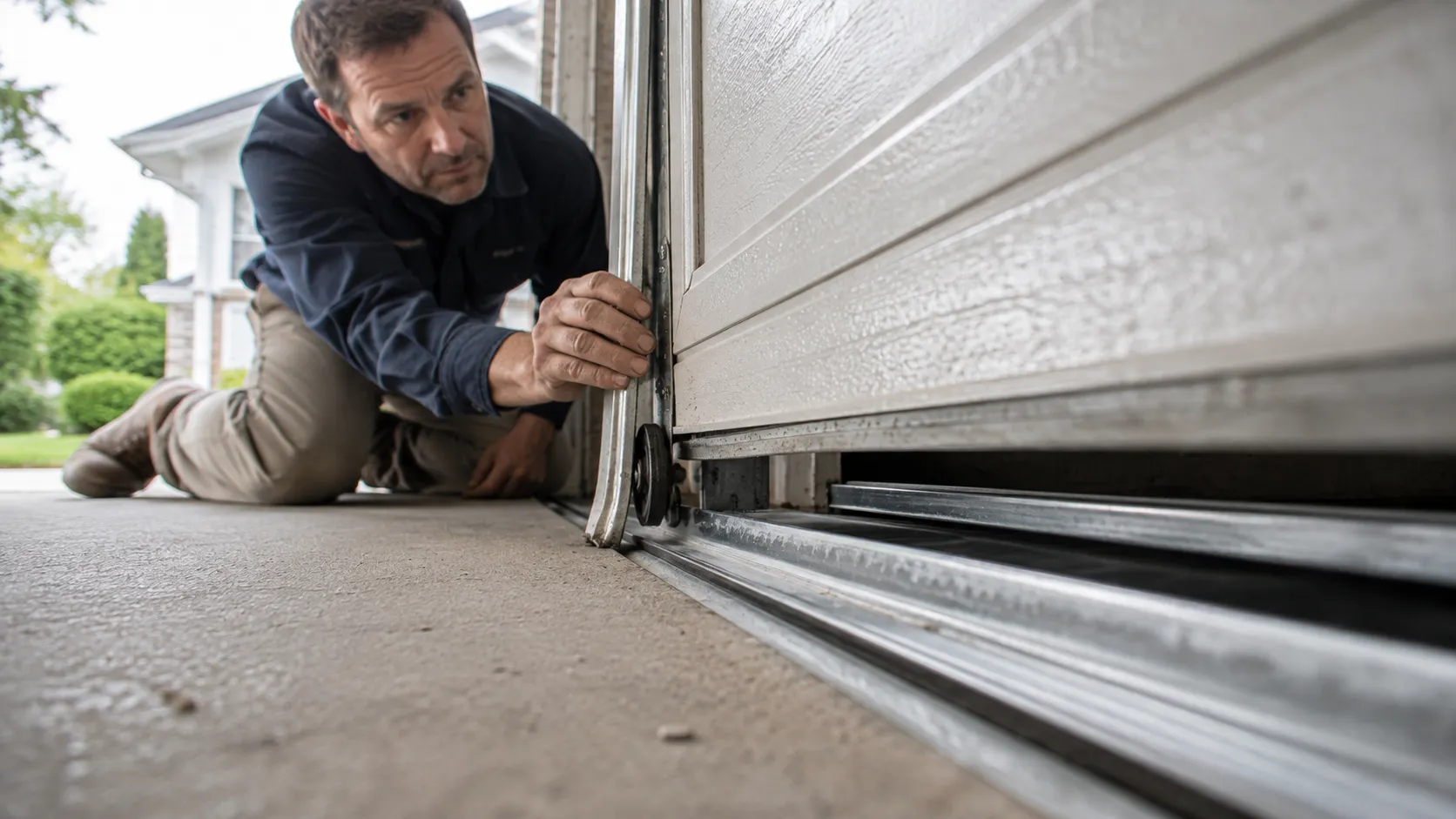
Start at the bottom of both tracks. If the door came off on one side only, look for a bent rail near a roller - a car bumper or a shopping cart is the usual cause, not a storm. Run your hand along the track from the floor to about waist height and feel for a kink or a spot where the rail pinches narrower than the rest.
Next, check the roller itself. On houses built anywhere near the 1961 median for this area, you're often looking at the original steel rollers and the original track brackets, since a full door hasn't always been replaced along with the house. A roller that's worn oval instead of round will walk out of the track under load, especially on the last few inches of travel where the curve tightens.
Look at the lag screws holding the vertical track to the jamb. Wood jambs on houses from this era loosen at the screw holes over decades of the door opening and closing, and a track that flexes even a little at the top will let the roller ride up over the lip lower down. If you see daylight between the bracket and the framing when the door runs, that's your answer before you touch anything else. This isn't a five-minute fix if the jamb wood has softened - that's a repair, not an adjustment.
What Local Conditions Do
Los Angeles sits in a mild temperate band, which cuts both ways for a garage door. You don't get the freeze-thaw cycling that heaves foundations and racks door frames in colder cities, so tracks here rarely go off from seasonal ground movement the way they do elsewhere. That's the good news.
The less obvious part is that mild weather means nothing forces an early inspection. In a place with hard winters, a door that's drifting out of alignment usually announces itself the first cold snap, because the metal contracts and the slack shows up fast. Here, a track can walk a fraction of an inch out of true for years with no seasonal event to flag it, because the temperature swing that would expose it just doesn't happen. The door keeps running, a little rougher each month, until a roller finally rides high enough to jump. So in this climate, off-track problems tend to be slow drift and wear rather than a sudden weather-driven event - which means catching it usually comes down to noticing the door look crooked or hearing a new scrape, not waiting for a storm to force the issue.
What Is Going On
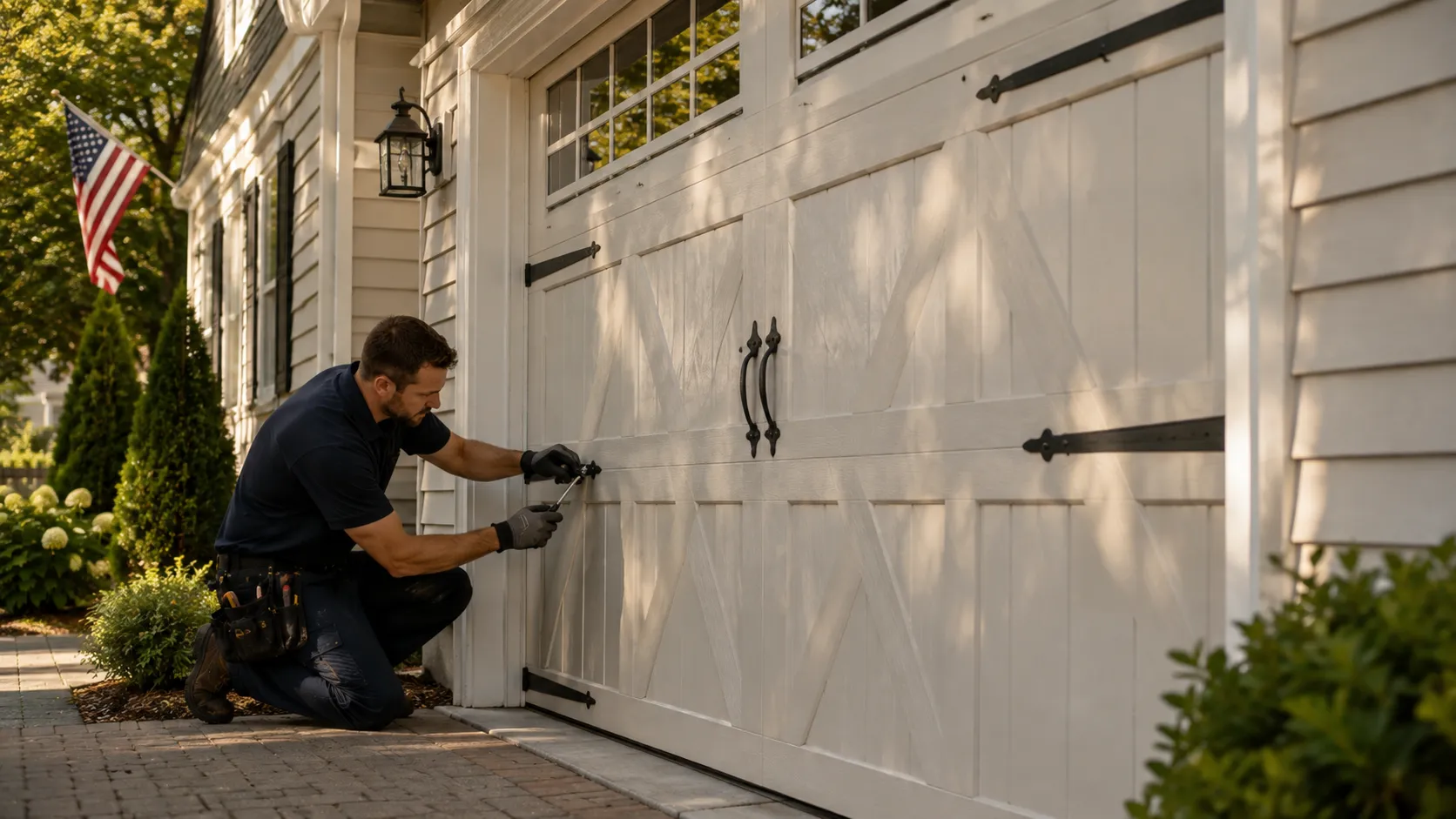
Across the areas this crew covers - a mix of housing that runs from 1943 up through 2012, with most of it clustered in that 1960s-70s band across the 52 named communities in the service area - the mechanical cause of an off-track door usually comes down to one of three things: a bent section of track from impact, worn hardware that's simply reached the end of its life, or a bracket that's loosened from the framing over the years. On the older end of that housing stock, all three show up more often together, because the original track and the original wall anchors are still doing the job forty or fifty years later.
A door doesn't jump the track for no reason. Something changed - either the track moved, the roller wore down, or the door's balance shifted because a spring lost tension and the opener started fighting the weight on every cycle. That last one matters: a door straining against a weak spring puts uneven load on the rollers, and uneven load is what eventually walks a roller out of the rail. If you're seeing this on a door that's also been noisier or heavier to lift by hand lately, the track probably isn't the root problem - the spring is.
Doing Nothing For Now
If the door only came off on one side and it's not sagging or twisted, it is sometimes safe to leave it parked shut until you can get it looked at - closed and not cycling is the lowest-risk state for a door that's already misaligned. What you should not do is keep opening and closing it. Every cycle on a bent track or a loose bracket makes the misalignment worse and increases the odds the door comes fully off the rail, which on a heavier door can bend the panel or damage the opener trolley.
We won't tell you a track realignment always holds. If the wood jamb behind the bracket has softened enough that screws won't bite, resetting the track is a short-term fix at best - that's a framing repair, and we'll say so rather than charge you twice. Given how much of the housing in this service area sits in that 1960s-70s window, that's not a rare call to make.
How We Can Help
Garage Door Repair
Springs, cables, tracks, rollers, and openers fixed by a tech who explains the problem before touching anything.
Learn more →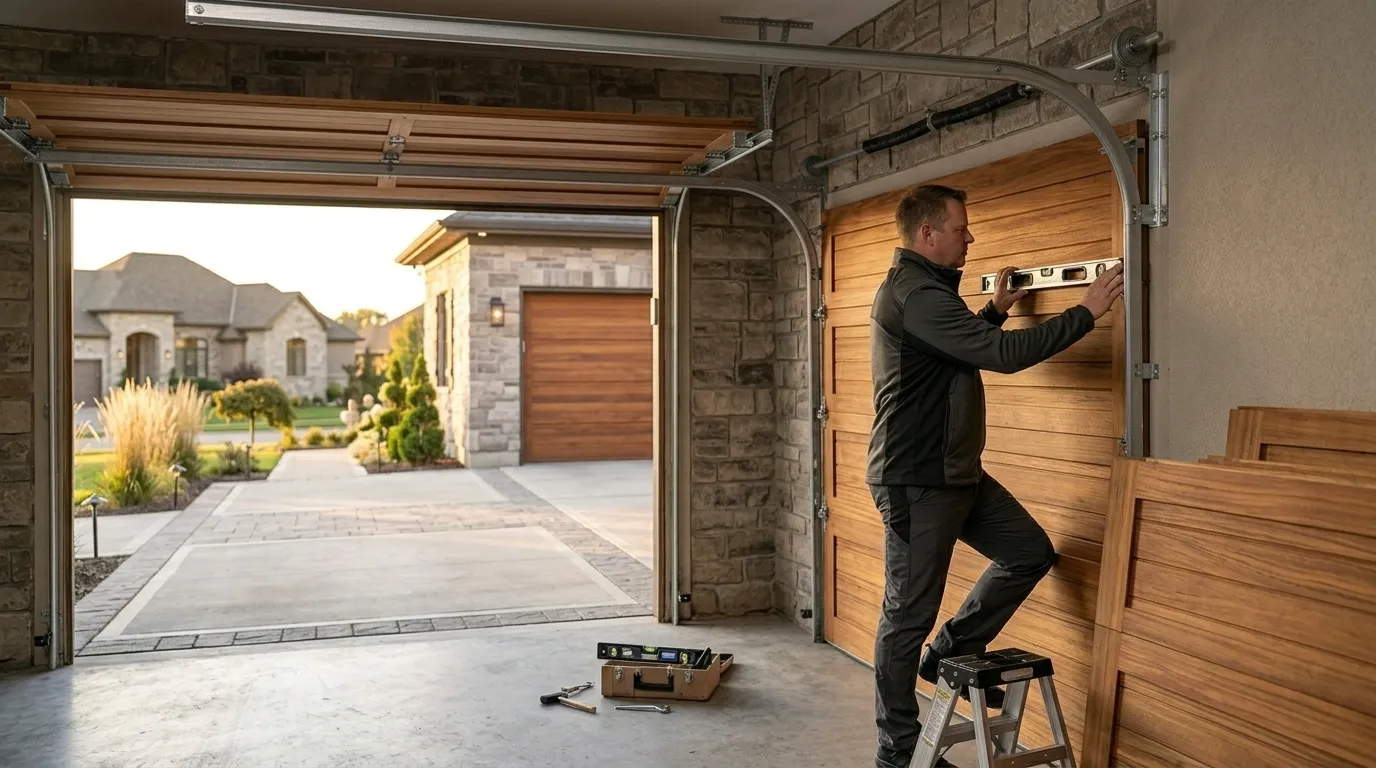
Garage Door Installation
New sectional doors sized and installed for the housing stock actually built in this area.
Learn more →
Garage Door Service
Tune-ups, lubrication, and safety checks that catch a small problem before it becomes a service call.
Learn more →Frequently Asked Questions
Can I push a door back onto the track myself?
You can sometimes reseat a roller by hand if the door is only off on one side and nothing is bent, but the door is under spring tension and heavy. If it's a two-car door or you're not sure the spring is holding, don't force it - that's how fingers and panels get hurt.
Is an off-track door always a track problem?
No. On a lot of the older housing stock in this area, a weak or broken spring is the actual cause - it lets the door run unbalanced, which loads the rollers unevenly until one jumps the rail. The track is often just where the problem shows up, not where it started.
Does LA's climate cause tracks to shift?
Not the way freeze-thaw climates do. The mild temperature band here means less seasonal metal movement, so tracks usually drift out of alignment slowly from wear and loose hardware rather than from a sudden weather event.
Have a Door That Needs a Second Opinion?
Call and describe what it is doing - we will tell you what it likely is.