
Los Angeles Garage Door Guide
What That Noise From Your Garage Door Is Actually Telling You
What clanks, squeals, and grinds actually mean in Los Angeles garages, tied to the area's 1960s-era housing stock and mild climate - and when the noise is a warning.
- Licensed & Insured
- Same-Area Service Calls
- Upfront Pricing
What to Check
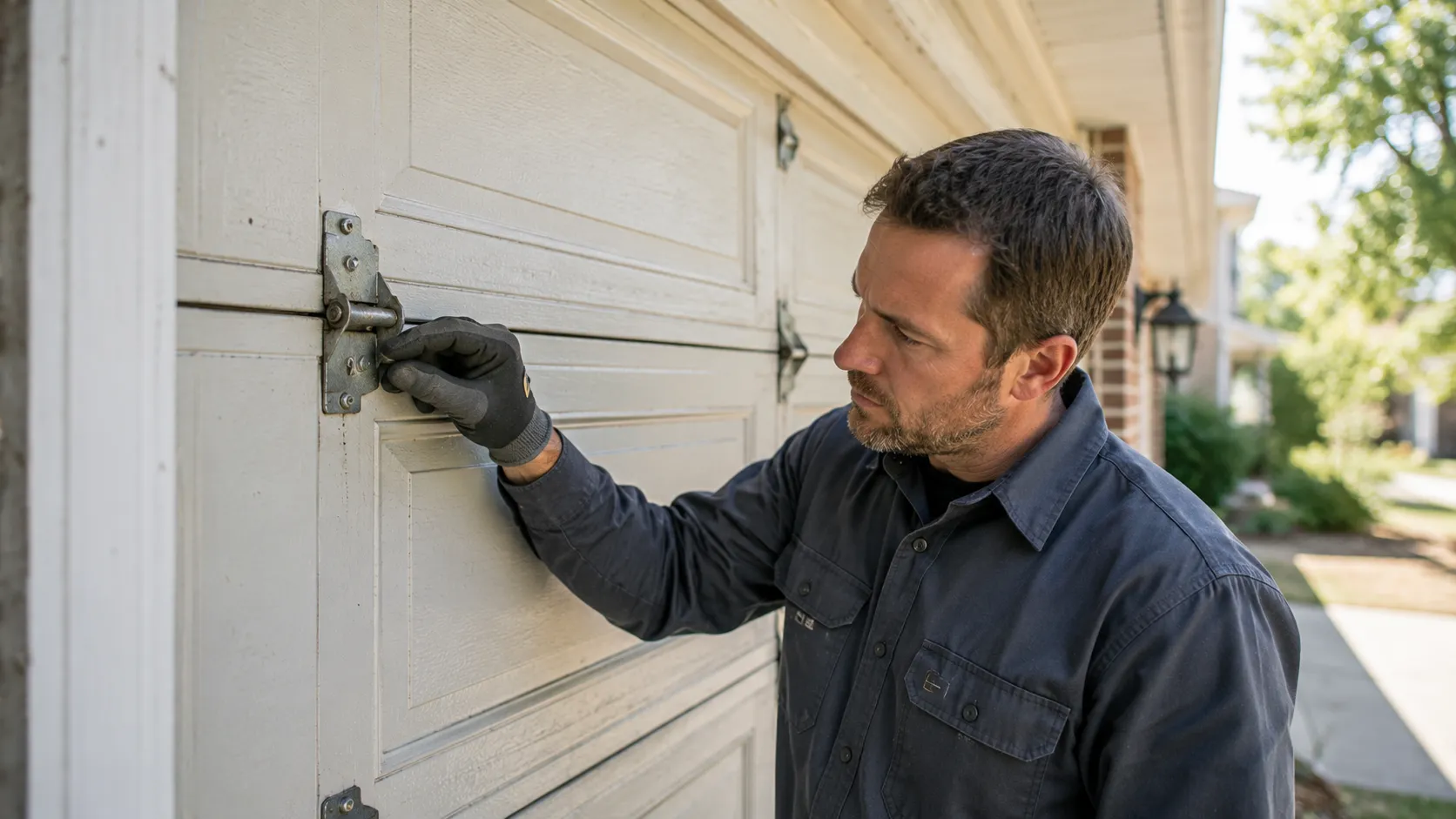
Start with the track brackets. A lot of the housing stock around here went up in the 1960s and 70s, and those original tracks were bolted to framing that's had sixty-plus years to settle a fraction of an inch here and there. A rhythmic thunk as the door travels usually means a bracket has worked loose from that long, slow shift, not that the whole track is failing.
Next, look at the rollers. If your house is on the older end of that 1943-2012 build range, there's a decent chance the rollers are the original steel type, and steel-on-steel is loud by design once the lubrication dries out. A high-pitched squeal that stops after the door has moved a foot or two is usually just a dry roller, not a bearing on its way out.
Check the opener's drive gear if the noise is a grinding sound at the motor unit itself rather than along the track. That's wear inside the unit, and it doesn't fix itself with oil.
Last, run the door by hand with the opener disconnected and listen for where the noise starts. Isolating the noise to a specific few feet of travel tells you whether you're dealing with a bracket, a bent section of track, or a roller - and that changes what gets fixed.
What Local Conditions Do
This area sits in a mild temperate band - no hard freeze, no long stretch of extreme heat. That's actually part of why doors here run longer without major failure than they would somewhere with big seasonal swings. Steel doesn't contract and expand hard enough here to loosen fasteners the way it does in a place with real winters.
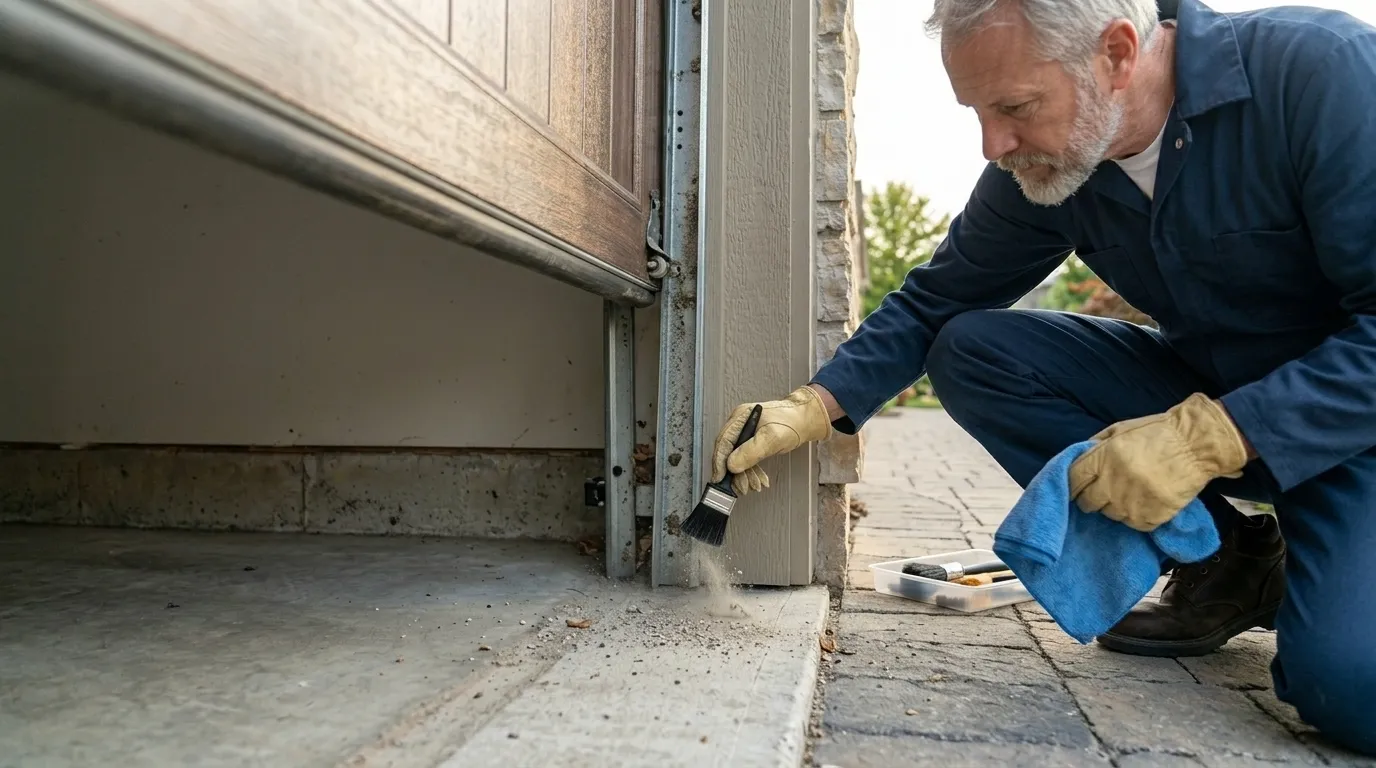
But mild doesn't mean silent. The same lack of a hard freeze-thaw cycle means dust and grit build up in track channels and roller bearings for years at a stretch without a season that flushes anything out. That grit is what turns a quiet roller into a squealing one - it's abrasive wear from accumulation, not from cold or moisture.
So when a door here starts making noise, it's rarely a weather-damage story. It's almost always a maintenance-gap story: parts that have gone a long time between lubrication because nothing forced the issue seasonally. That's worth knowing before you assume something dramatic broke.
What Is Going On
Put the housing age and the climate together and a pattern shows up. A door installed anywhere near the median build year of 1961 has had roughly six decades of use on hardware that was never made to be lifetime parts. Springs, rollers, and cable end fittings all have a duty-cycle rating, and a door that old has usually cycled through it more than once even if nobody ever replaced anything.
A loud bang on opening or closing, as opposed to a steady grind, usually points to a spring - either a torsion spring that's lost tension unevenly or an extension spring with a worn end link. That's not a lubrication problem, and it's not something to keep running through hoping it settles.
A rattling that travels with the door the whole way, rather than sticking to one spot, often means the track itself has an old bend or a section that's no longer perfectly parallel with its opposite side - again, more common on doors from the older end of the local building range than on anything installed in the last decade.
Doing Nothing For Now
Some noises really can wait. A dry roller squeal, once you've confirmed it's isolated and not paired with any grinding at the opener, is a lubrication job, not an emergency - you can put it off a few weeks without risk.
Here's the honest limit, though: we can't tell you over the phone whether a bang is a spring about to let go or a bracket that's just loud. Torsion springs under tension are not a guess-and-see situation - a spring that fails while the door is in motion can cause real injury, and it's one of the few noises on this list we'd rather look at in person than have you keep testing.
If the noise is new, isolated, and quiet by comparison, it's fine to keep an eye on it. If it's a bang, a grind at the opener, or anything that's gotten louder over a week or two, that's the one worth having someone check rather than living with.
How We Can Help
Garage Door Repair
Springs, cables, tracks, rollers, and openers fixed by a tech who explains the problem before touching anything.
Learn more →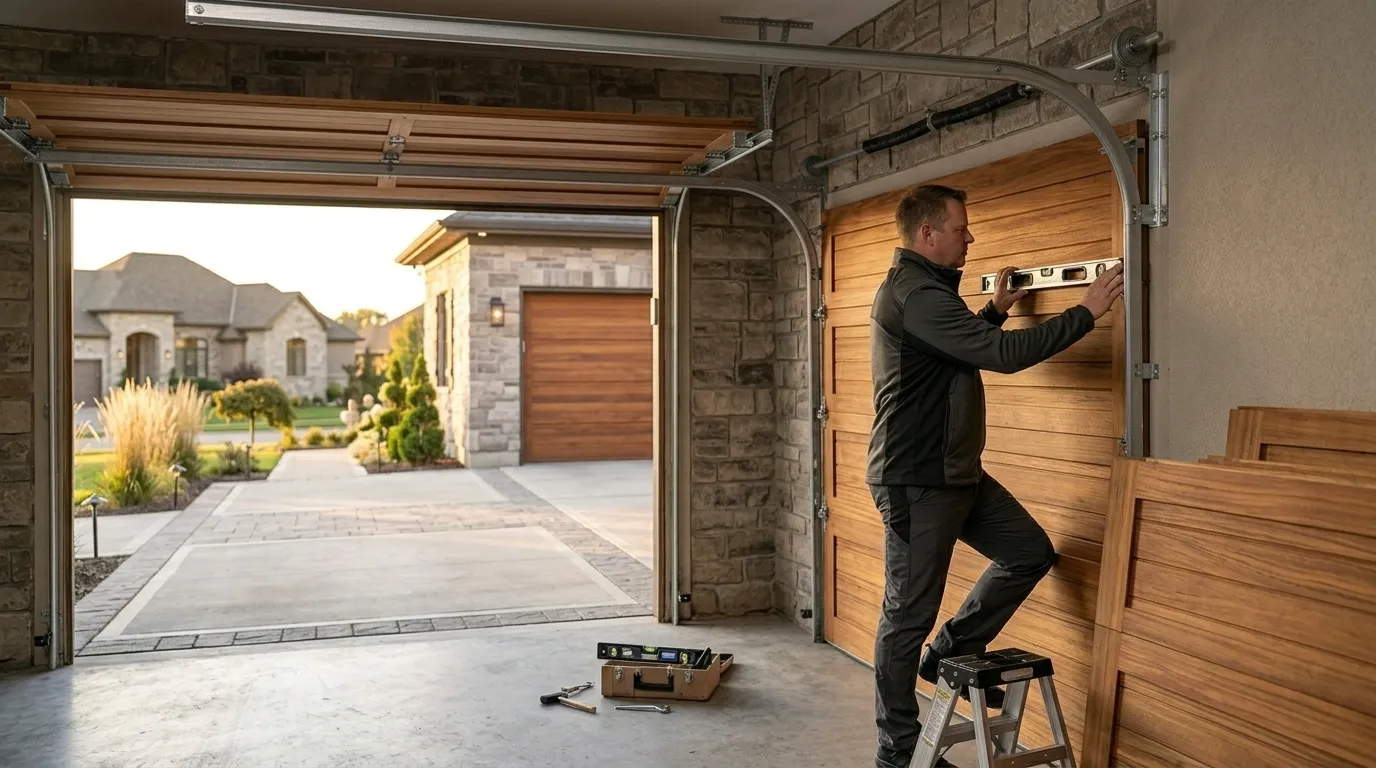
Garage Door Installation
New sectional doors sized and installed for the housing stock actually built in this area.
Learn more →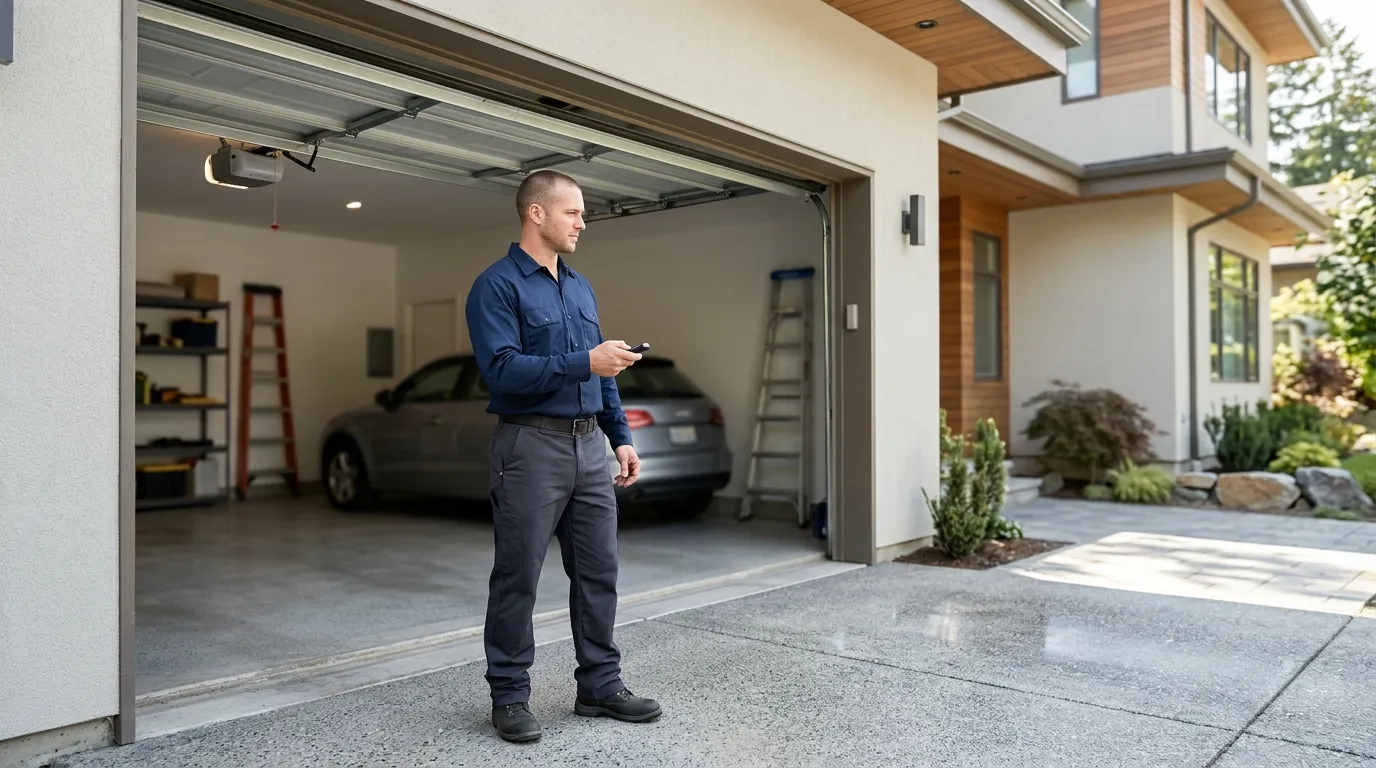
Garage Door Service
Tune-ups, lubrication, and safety checks that catch a small problem before it becomes a service call.
Learn more →Frequently Asked Questions
Why does my garage door only make noise at the very top or bottom of its travel?
That usually points to the track brackets nearest that section coming loose, which is common on houses from the area's older building stock where the track was bolted to framing decades ago. It's a tightening job in most cases, not a full track replacement.
Is a squeaky garage door dangerous?
On its own, no - a squeal from a dry roller is a maintenance issue, not a safety one. It becomes a concern only if it's paired with a bang or grind, which can point to spring or cable wear that does carry real risk.
Does the mild Los Angeles climate mean garage doors here last longer?
In some ways yes - without hard freeze-thaw cycles, fasteners and steel components don't loosen from temperature swings the way they do elsewhere. But dust and grit still build up in tracks and rollers over years, so noise still develops, just from a different cause.
My door is original to a house built in the 1960s - should I worry about every noise?
Not every noise, but a door installed around that era has usually cycled far past what its original springs and rollers were built for. Bangs or grinding are worth checking sooner on a door that old than on newer hardware.
Have a Door That Needs a Second Opinion?
Call and describe what it is doing - we will tell you what it likely is.