
Service
Garage Door Repair Across Los Angeles
Torsion springs, worn rollers, and off-track doors on Los Angeles's 1960s-era housing stock. Same service area from Culver City to Carson. Book a visit today.
- Licensed & Insured
- Same-Area Service Calls
- Upfront Pricing
Booking a Visit
We work the stretch of Los Angeles between Culver City, a mile off, and areas as far out as Carson, fifteen miles south, plus the closer-in pockets like Palms, Cheviot Hills, Rancho Park, and Mar Vista. If your door won't open, is stuck halfway, or is making a noise that worries you, call and describe what you're seeing. Most jobs get scheduled for the same day or the next one, depending on the route that day.
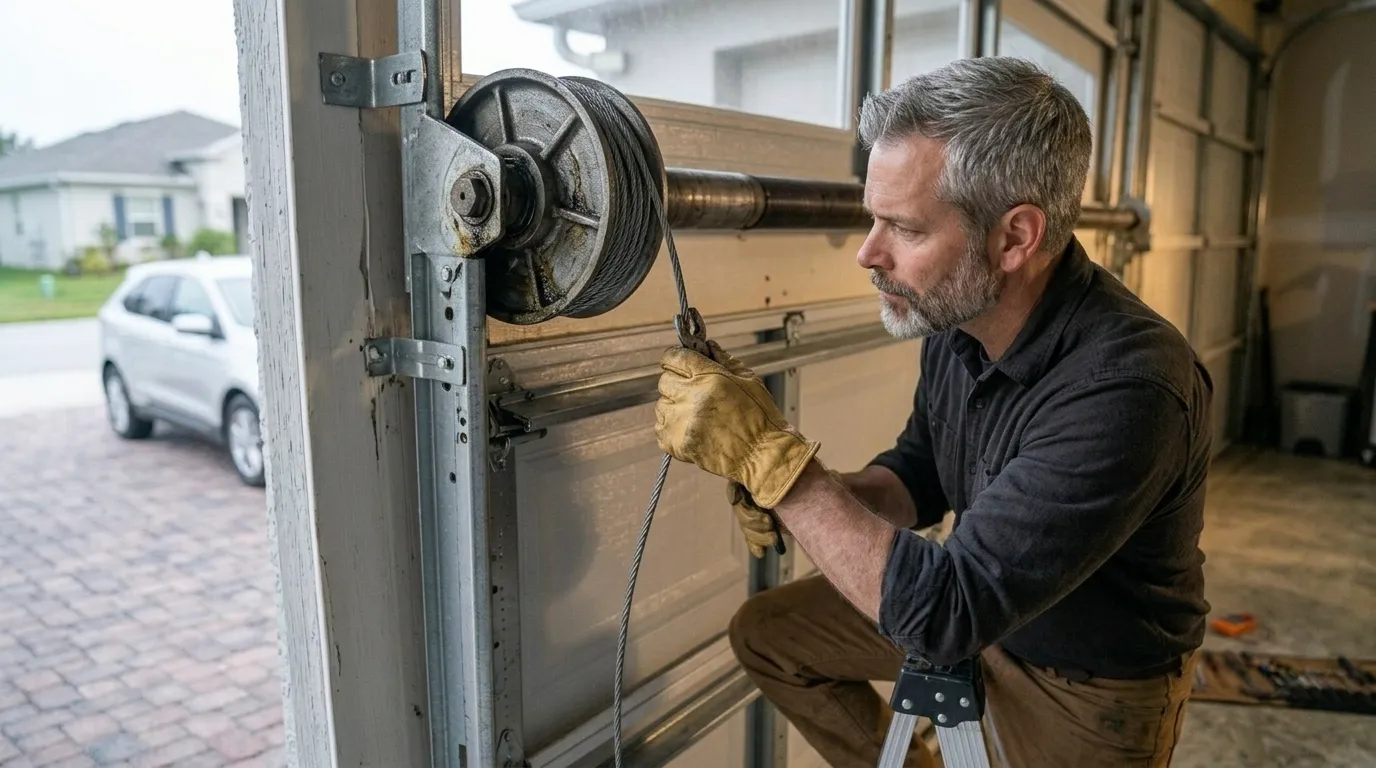
Before we come out, it helps to know the door's rough age and whether it's a single or double. If you can see the spring - the coil above the door, or the two coils on either side of the track - a quick photo on the phone speeds up the visit, since we can bring the right spring size instead of guessing on-site.
We don't do phone diagnoses beyond the basics. A door that's making noise could be a dozen things, and telling you it's "probably the opener" before we've looked at the rollers and track isn't honest work. Book the visit, and we'll tell you straight what's actually wrong once we're standing in front of it.
Start here: [/]
What Causes It Around Here
Housing in this service area went up mostly between 1943 and 2012, with the median build year landing around 1961. That matters because a huge share of the doors we open are original torsion or extension spring setups from that era - steel that's been cycling up and down for six decades, well past any spring's rated life regardless of how it looks from outside.
Across the 52 named neighborhoods we cover, the stock skews 1960s and 70s, and it shows in the hardware: galvanized springs that were never swapped, steel rollers instead of nylon, and openers that have been replaced once or twice but bolted to the same aging track.
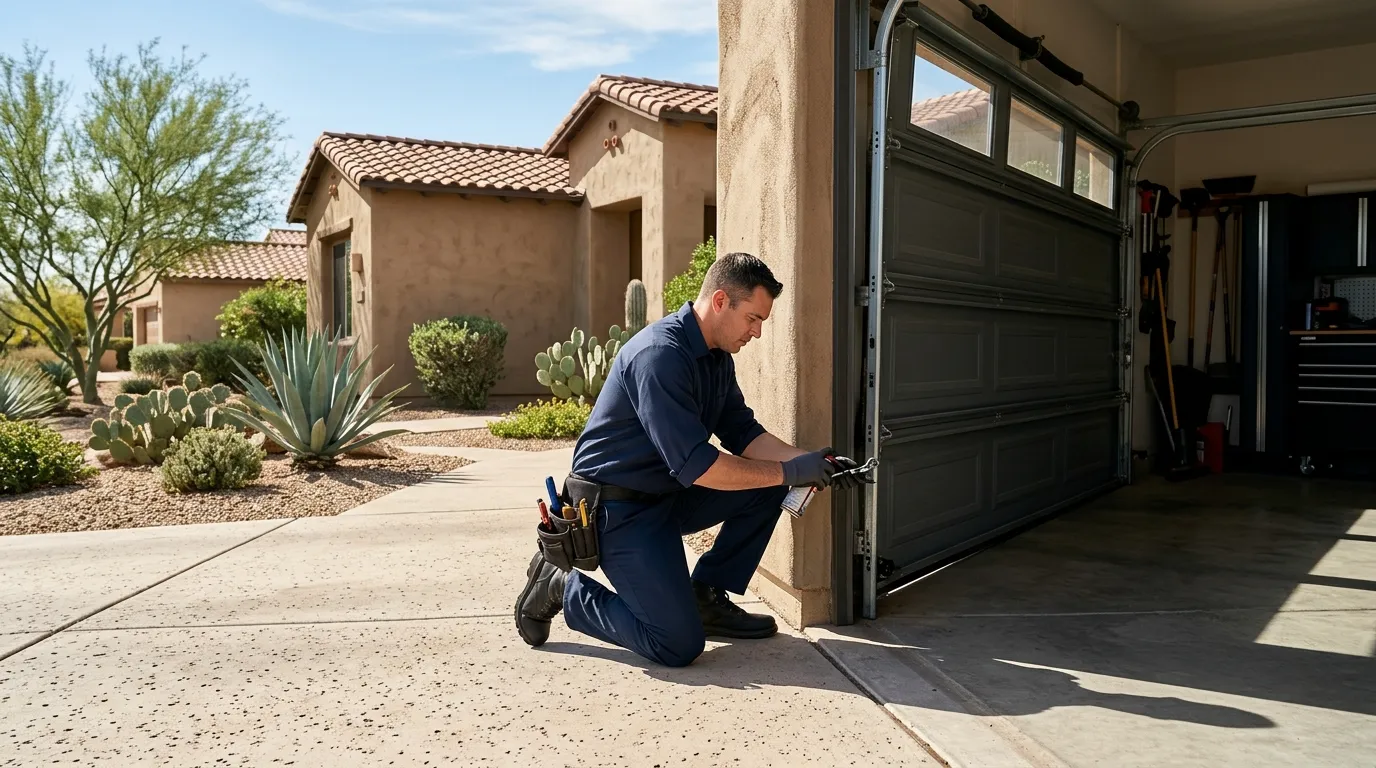
The mild temperate climate here works in your favor in one way - no ice locking up a track, no freeze-thaw cracking a slab under the door. But it doesn't spare the door from UV. Years of sun on an aluminum or steel panel dries out weatherstripping, bakes the lubricant out of hinges, and lets nylon rollers go brittle faster than the manuals suggest. So the failures we see aren't weather emergencies - they're slow wear finally giving out, usually on a door that's been due for a spring change for years.
What It Costs
We don't quote a flat number over the phone, because the two biggest cost drivers - spring type and door weight - aren't things we can see without being there. A single torsion spring swap on a light aluminum door is a different job than dual springs on a heavy insulated steel double door, and pricing them the same would be dishonest in one direction or the other.
What we can tell you: the technician gives you a firm price before touching anything, based on the actual door in front of them, not an estimate range read off a script. If the fix is a $20 roller instead of a $200 spring, that's what you're billed for.
With median household income in the service area at $86,072, we see a mix of straight repairs and full opener or door replacements - some owners choose to replace rather than keep patching a door that's near the end anyway. We'll tell you when a repair isn't worth it compared to replacement, rather than stringing along a door that's going to need the next part in six months.
What You Are Seeing
A door that won't budge, with the opener motor straining or clicking, usually means a broken spring - the door is too heavy to lift without it, opener or no opener. A loud bang from the garage, often mistaken for something falling, is frequently the spring itself failing.
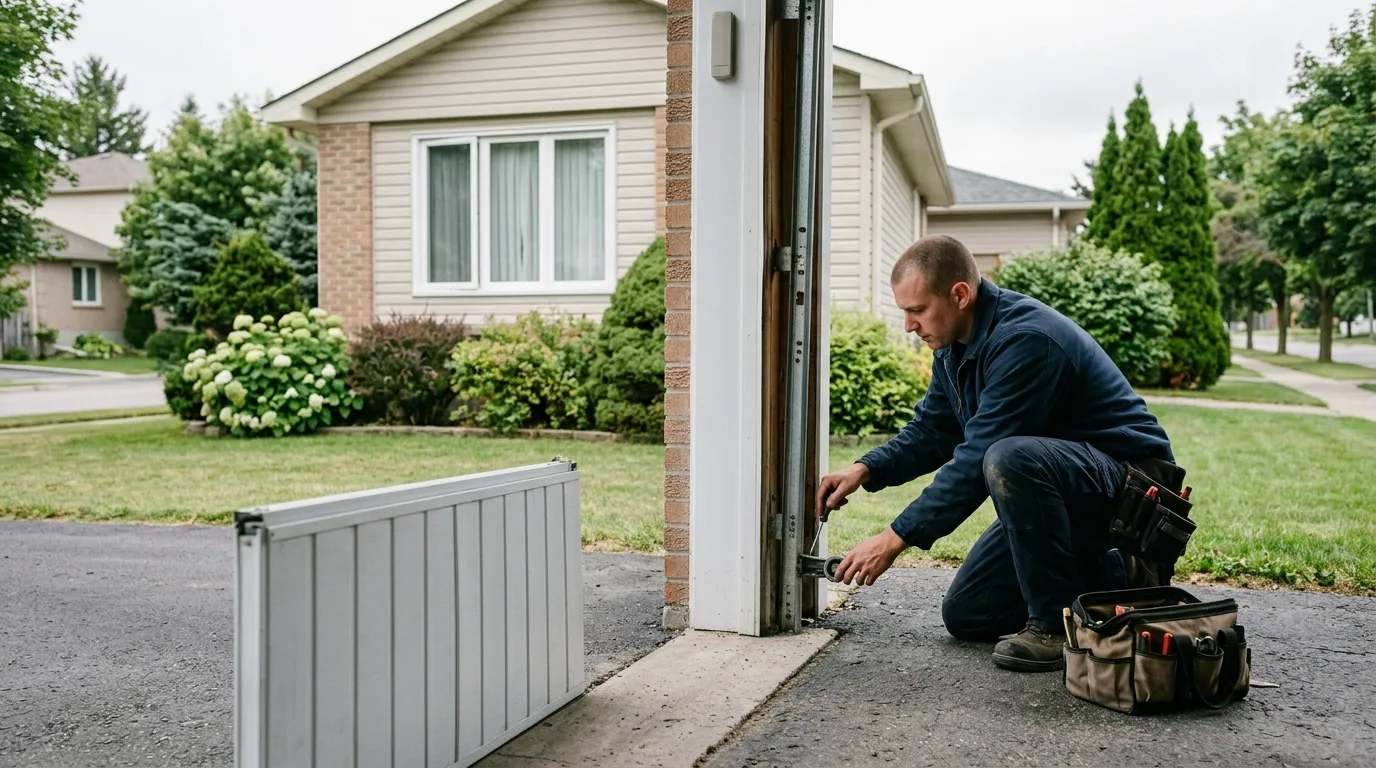
A door that's off track, hanging crooked, or scraping against one side as it moves points to a bent track or a broken cable, common once the original 1960s-era hardware starts fatiguing. Grinding or grating from the opener, separate from the door itself, is often the gear inside the unit wearing down rather than anything structural.
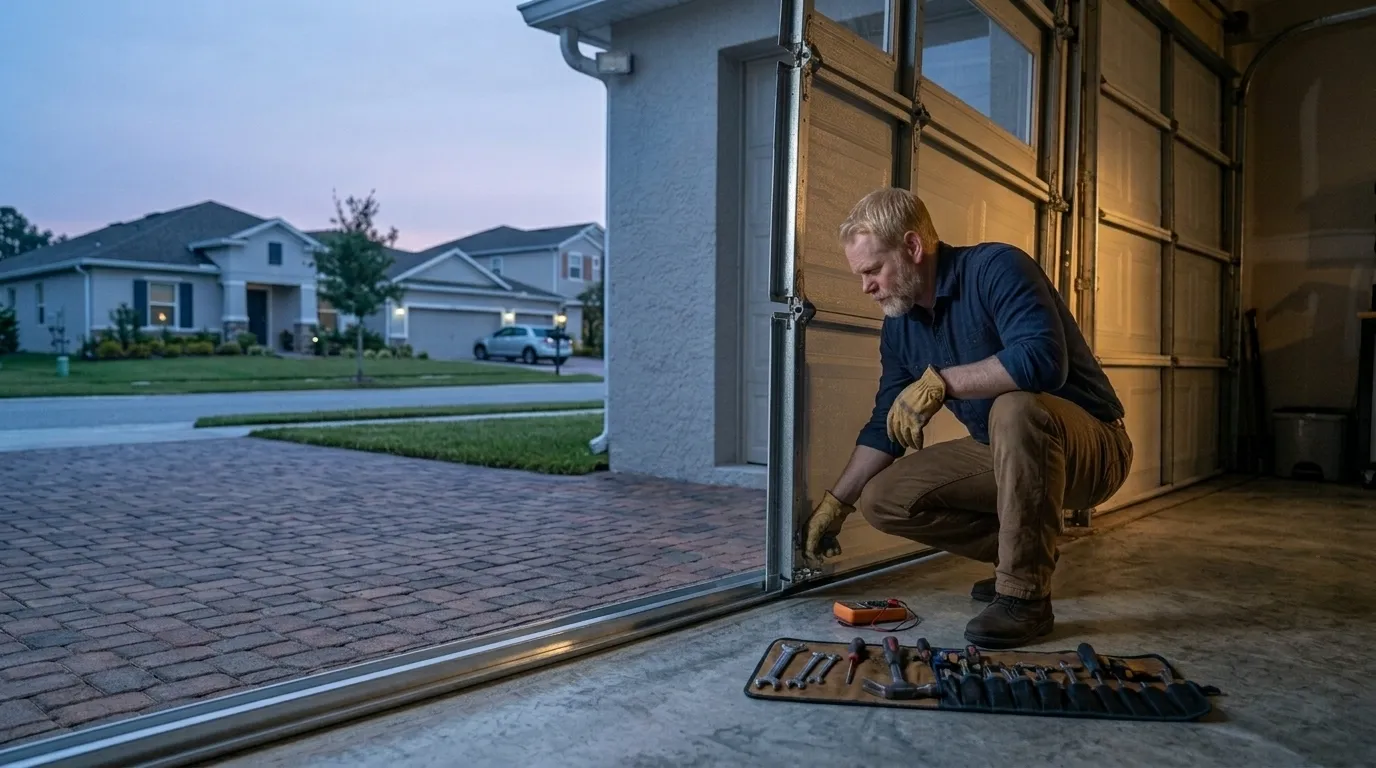
A door that reverses on its own partway down, or won't close all the way, is almost always the safety sensors - small eyes near the floor on each side of the track, low enough that they get bumped or coated with dust over the years. It's a five-minute fix most of the time, not a sign the whole opener needs replacing. If you're not sure which of these you've got, that's fine - describe the noise and the movement, and we'll narrow it down before the truck even leaves.
Jobs Like Yours
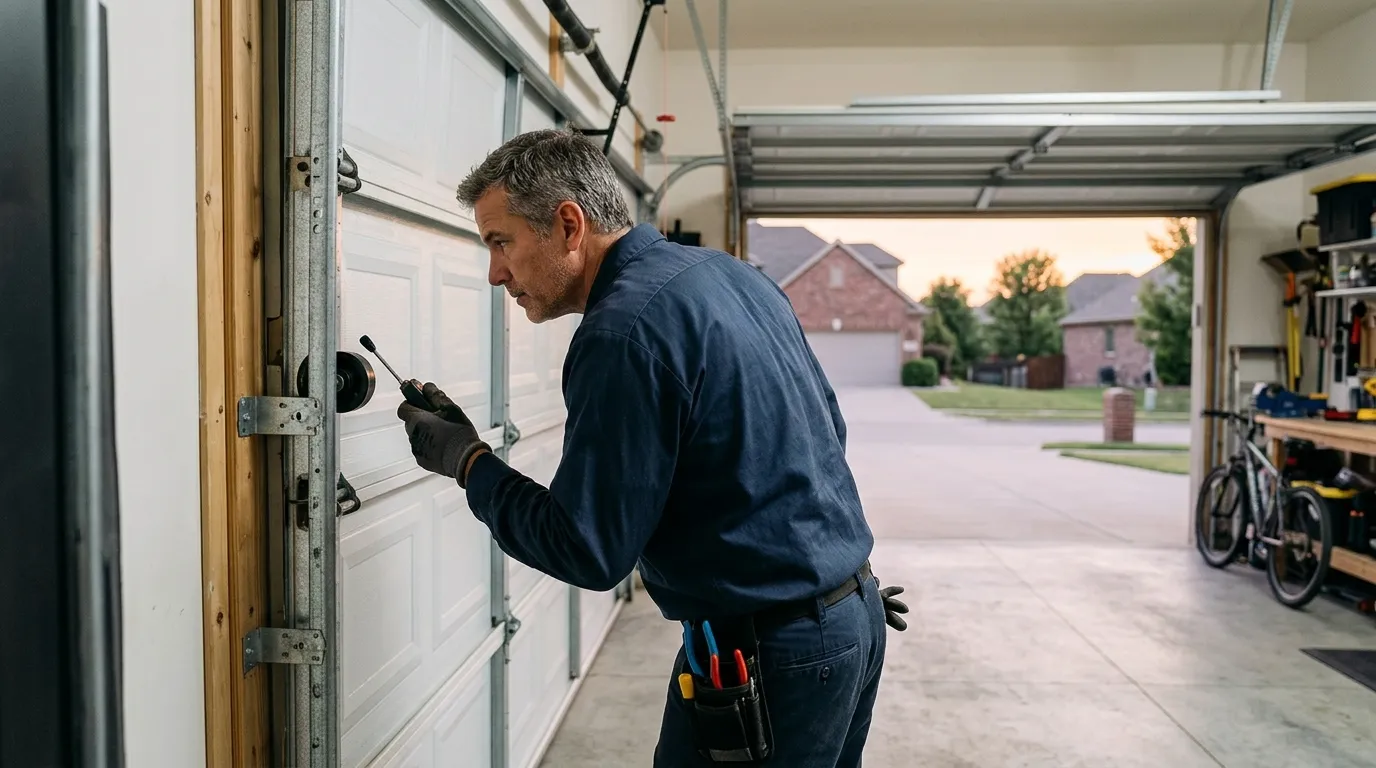
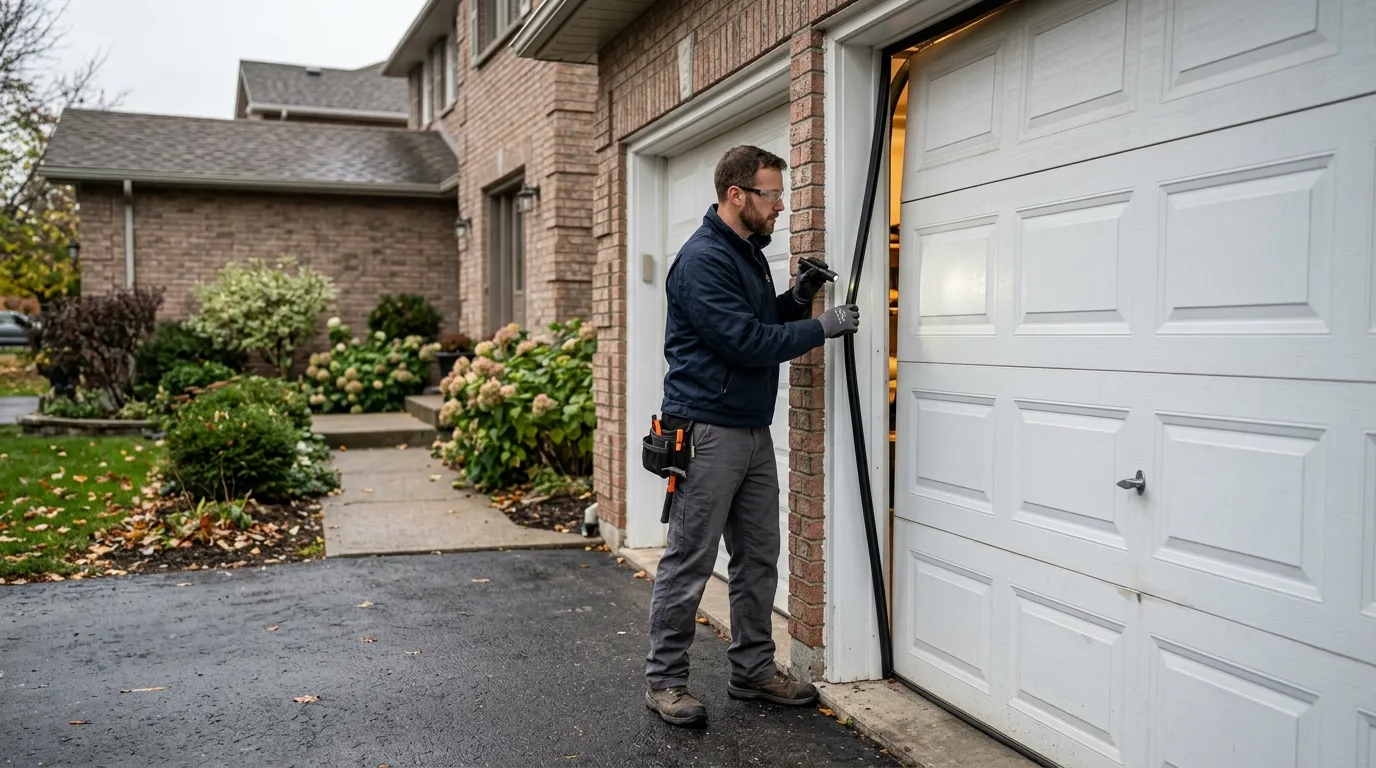
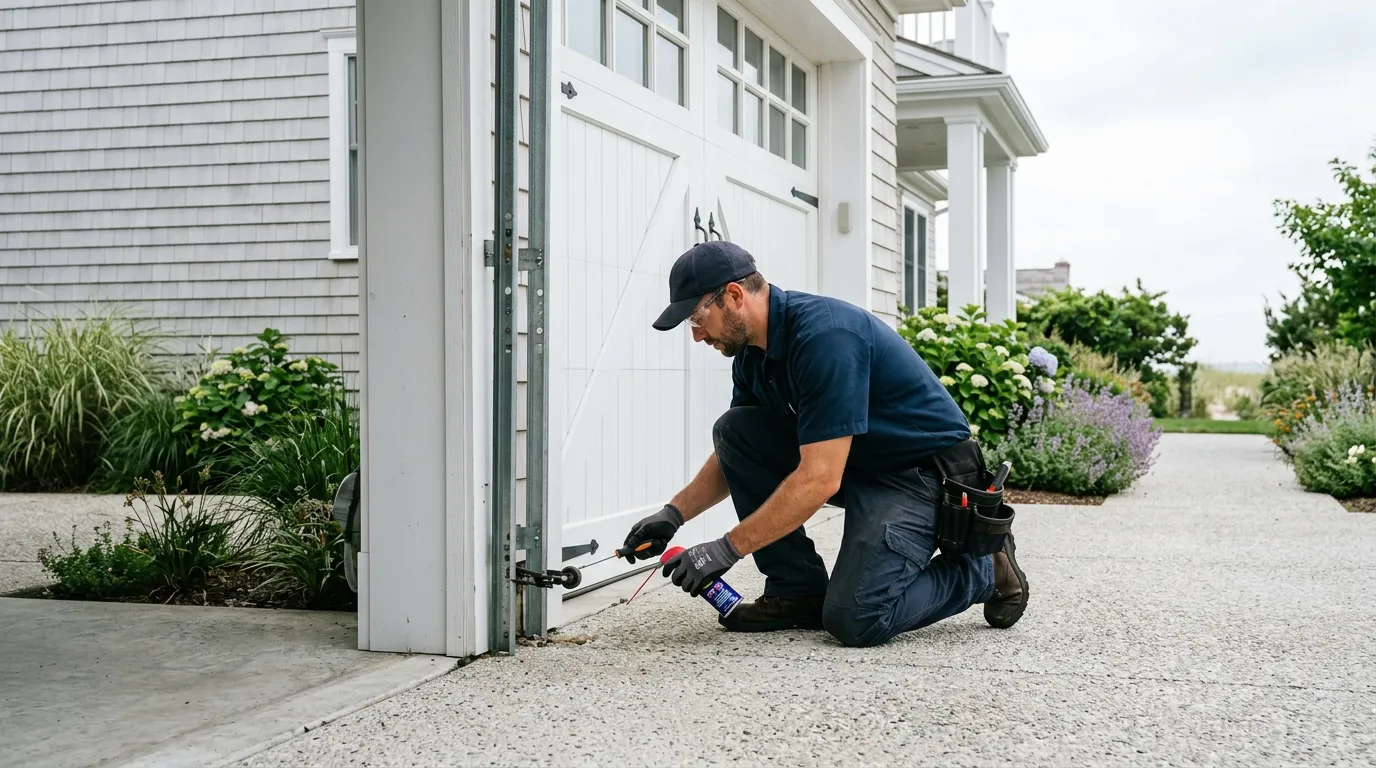
Recent work from this service line.
Talk to a Technician Before You Book
Describe what the door is doing and get a straight answer on what it likely needs.
Why Los Angeles Calls Us
What Happens When You Call
-
1
Call or Request a Quote
Tell us what the door is doing and roughly how old the house is - that alone points us toward the likely part before a truck leaves.
-
2
On-Site Diagnosis
A tech checks the spring, cables, tracks, and opener in person and tells you plainly what is actually wrong.
-
3
Straight Price, No Surprises
You get a number before any work starts. It covers parts and labor, nothing added after the fact.
-
4
Fixed the Same Visit
Most repairs are done in one trip. If a part needs sourcing, we tell you that upfront instead of guessing.
Other Ways We Can Help
Frequently Asked Questions
How old does a garage door spring usually get before it breaks?
It depends on cycles, not calendar years, but most of the original torsion and extension springs we replace are from houses built in the 1960s and 70s, meaning they've outlasted their rated life by a wide margin. If your door and house are from that era and the spring's never been swapped, it's due.
Do I need a new opener or just a repair?
Most of the time it's a repair - gears, sensors, or a worn drive belt. We only recommend a full opener swap when the motor itself is failing or when a repair would cost close to what a new unit runs. We'll tell you which situation you're in before we start.
Why did my door start acting up with no obvious cause?
In this climate, it's rarely a single event. Years of sun exposure dry out rollers and weatherstripping gradually, and a spring nearing the end of its cycle count can fail on an ordinary day. What looks sudden is usually wear that's been building for a while.
Need Garage Door Repair Across Los Angeles?
Call now for straight answers on cost and timing.