
Los Angeles Garage Door Guide
Why Your Safety Sensors Keep Drifting Out of Alignment
Why garage door safety sensors misalign in Los Angeles homes built mostly in the 1960s-70s, what the mild climate does and doesn't cause, and what to check first.
- Licensed & Insured
- Same-Area Service Calls
- Upfront Pricing
What to Check
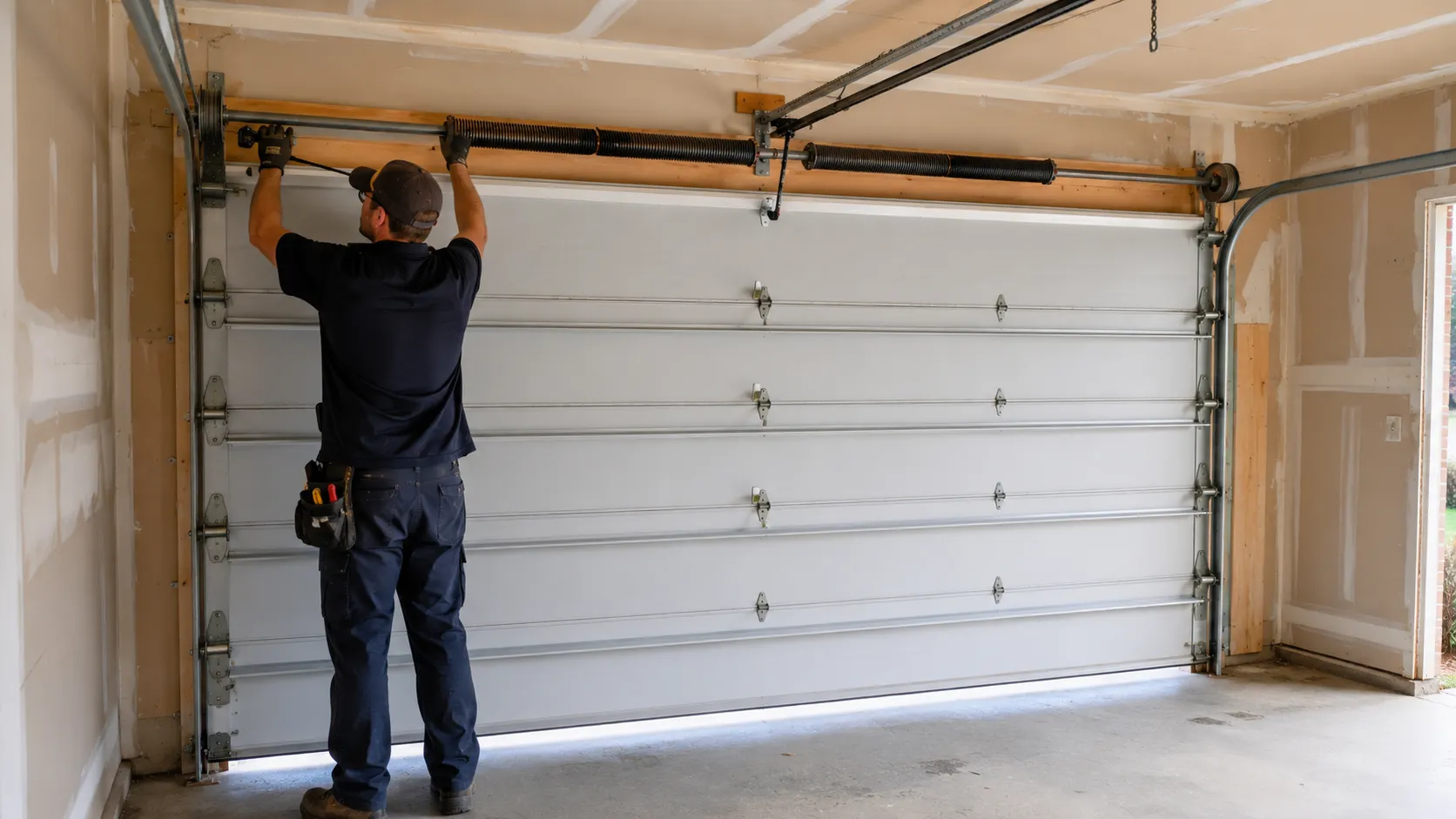
Look at the two small boxes mounted a few inches off the garage floor, one on each side of the track. One sends an infrared beam, the other receives it. If the receiver's light is blinking instead of solid, the beam is broken or the eyes aren't pointed at each other anymore.
Start by wiping both lenses - dust and cobwebs block the beam as effectively as misalignment does, and in a lot of Los Angeles garages that sit open half the year, dust buildup is the more common culprit than anyone expects. After that, check the bracket each sensor sits on. Grab it and see if it moves. On original brackets from houses built in the 1960s and 70s (median build year across this service area is 1961, per F1/F2), the mounting screws are often driven into wood jambs that have shrunk slightly over sixty-plus years, so the bracket itself can rock even when the sensor eye looks fine.
If both lenses are clean and both brackets are solid, sight down the beam line yourself - crouch at door height and look across from one eye to the other. A visible offset, even a small one, is enough to stop the door from closing.
We don't recommend forcing a bent bracket back into place with pliers. It usually reads square that day and drifts again within a week.
More on the shop at Los Angeles Garage Door Pros.
What Local Conditions Do
Los Angeles sits in a mild temperate band, which actually works in your favor here - you're not dealing with the freeze-thaw heaving that racks sensor brackets loose every winter in colder parts of the country. Concrete slabs here don't go through the expansion-contraction cycle that pushes track anchors out of true season after season.
What does move things, slowly, is age and settling. A slab poured in 1961 has had six decades to settle a few fractions of an inch, and if the garage was built on any kind of fill or slope - common enough in a service area that spans 52 named neighborhoods with very different terrain, from the flats near Culver City to the hillier ground toward View Park-Windsor Hills - that settling isn't always even on both sides of the door. One sensor drifts a hair lower than the other and the beam stops lining up.
Humidity swings aren't the driver here the way they are in wetter climates. In this climate band, the wood jambs the brackets are screwed into dry out and shrink gradually rather than swelling and warping, which loosens the screw bite over years rather than causing sudden movement after a storm.
What Is Going On
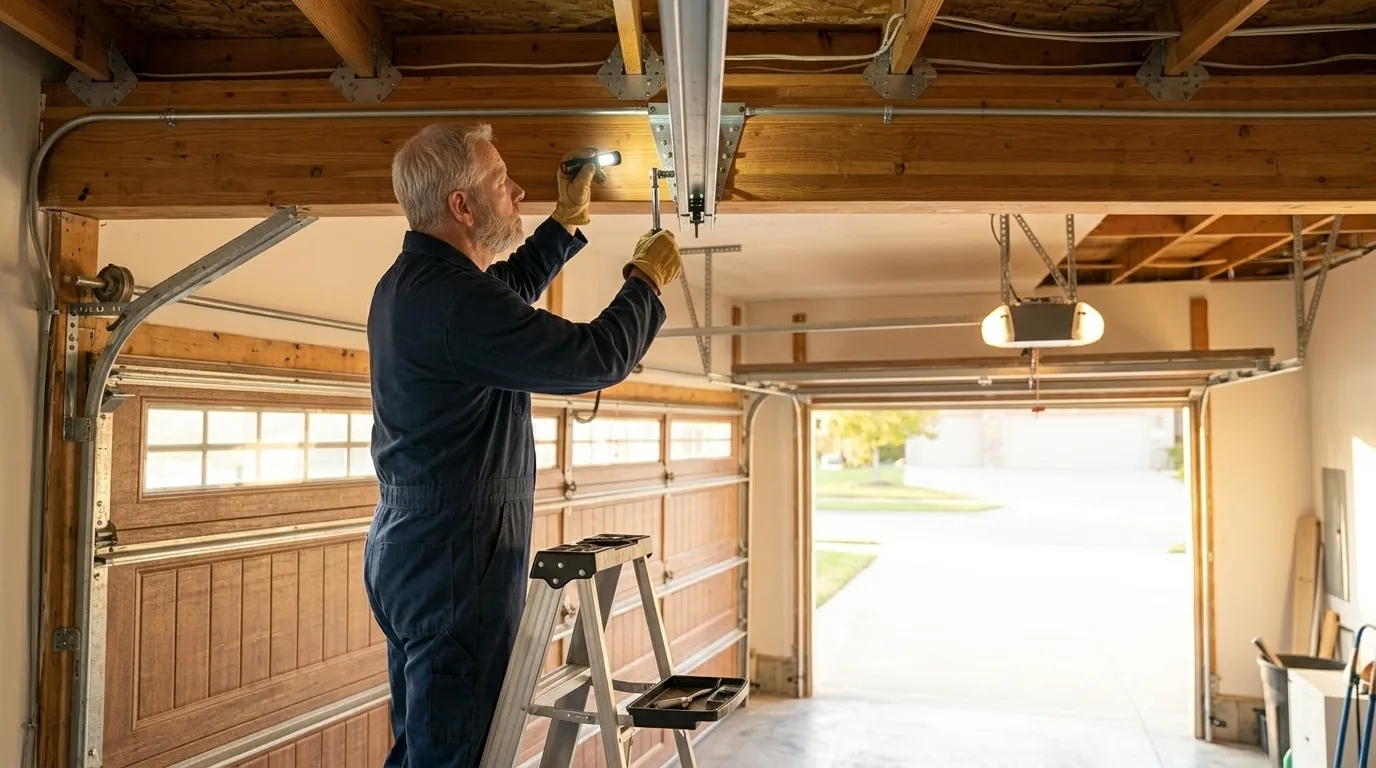
Most of the drift calls we see trace back to one of three things, and all three connect to how old this housing stock is. First, the bracket itself has worked loose from a jamb that's shrunk with age - common in houses from the 1943-2012 build range that makes up this service area, especially anything close to that 1961 median. Second, the door has been bumped - a bike, a bumper, a ladder leaned against the track - and the sensor eye got nudged without anyone noticing right away. Third, the wiring has flexed at the connection point enough times that the sensor housing itself sits a few degrees off from where it was originally mounted.
None of these are exotic problems. They're what happens to a mechanical safety device that's been screwed to the same aging stud for years in a garage that gets used daily. With roughly 200,536 owner-occupied houses across this service area, a large share of them from that same mid-century build wave, this is one of the most common calls we get - not because the sensors are bad, but because the mounting surface underneath them has had a long time to shift.
It's rarely the electronics failing. It's almost always the geometry.
Doing Nothing For Now
If your sensors are blinking but the door still closes when you hold the wall button down, you don't have an emergency - you have an override that's masking a real problem. That's worth saying plainly: holding the button down bypasses the safety circuit entirely, and the sensors exist specifically to stop the door on something that shouldn't get crushed.
We won't tell you every blinking-light call needs a truck out that day. If you can see an obvious bump or a loose bracket screw, a five-minute check with a level and a screwdriver sometimes fixes it without any call at all. That's the honest limitation here: alignment is often a homeowner fix, and we'd rather you try it first than pay a service charge for something you could've done yourself with a flashlight.
What we don't recommend is leaving it alone indefinitely and just using the manual override every day. On houses from this era, a loose bracket usually means the jamb underneath is loosening too, and that's worth having looked at before it becomes a bigger repair than a $10 bracket.
How We Can Help
Garage Door Repair
Springs, cables, tracks, rollers, and openers fixed by a tech who explains the problem before touching anything.
Learn more →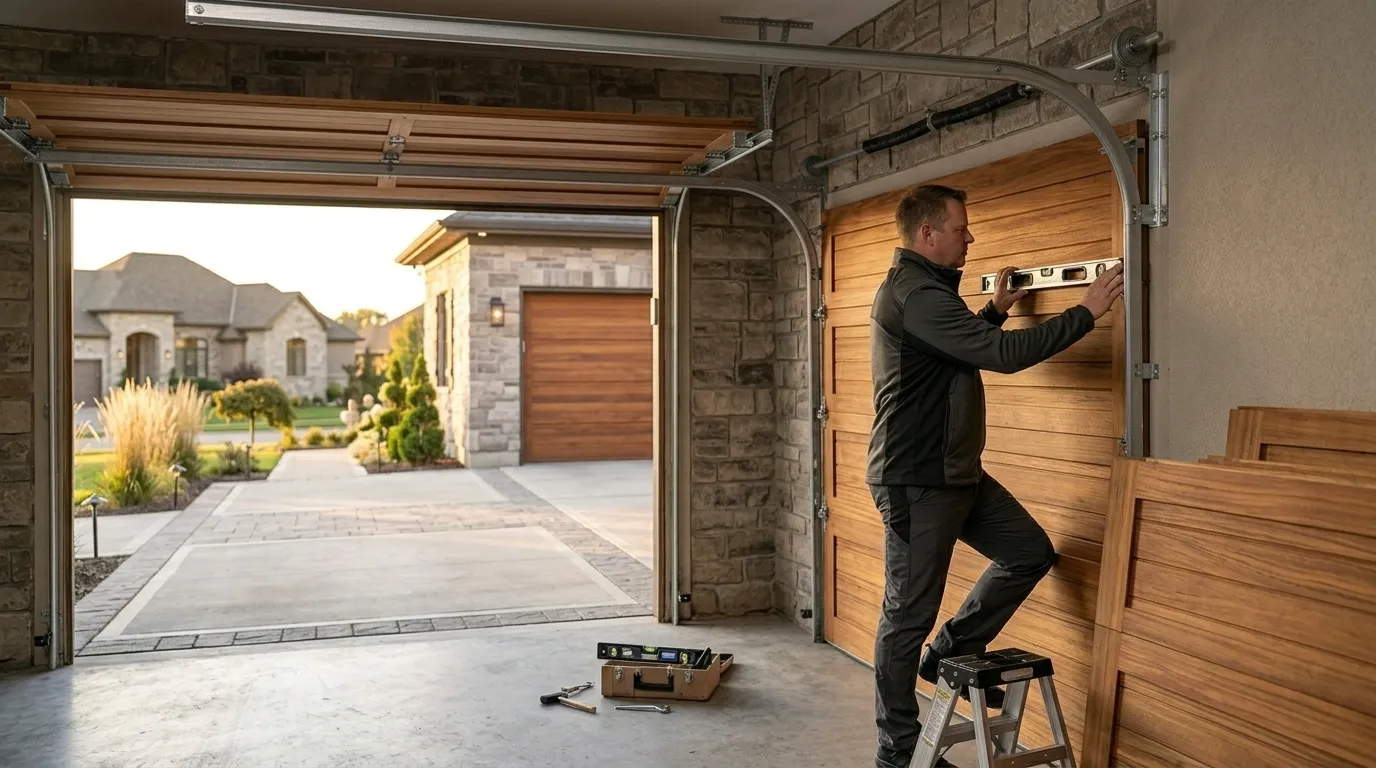
Garage Door Installation
New sectional doors sized and installed for the housing stock actually built in this area.
Learn more →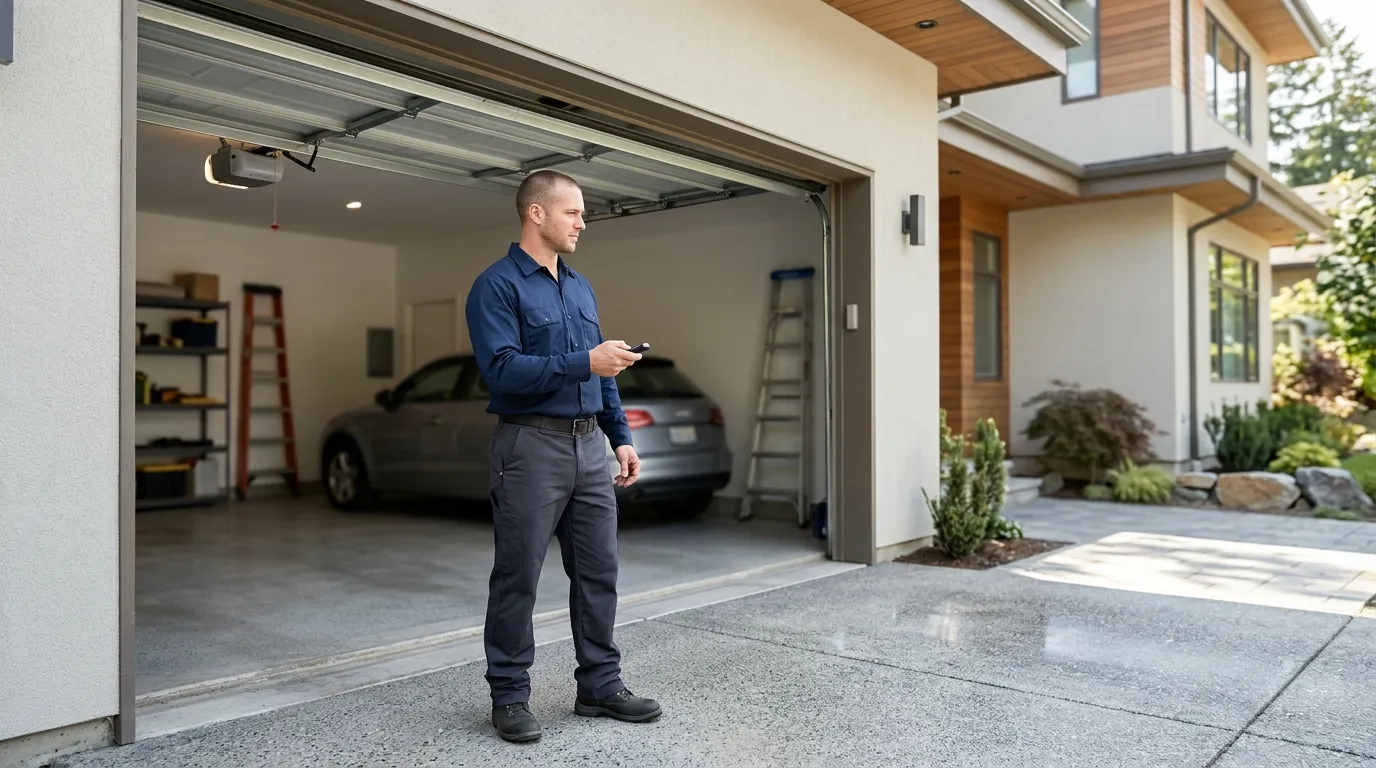
Garage Door Service
Tune-ups, lubrication, and safety checks that catch a small problem before it becomes a service call.
Learn more →Frequently Asked Questions
Why do my garage door sensors say aligned one day and blink the next?
Usually it's something physical moving slightly - a bracket that's loosened on an aging wood jamb, dust settling on the lens, or the door getting bumped. In houses from this area's typical 1960s-70s build era, the mounting surface itself has had decades to shift, so alignment that held for years can slip gradually rather than all at once.
Does Los Angeles weather cause sensor drift?
Not the way it does in colder climates. This area sits in a mild temperate band, so you're not getting the freeze-thaw cycle that racks brackets loose seasonally. Drift here tends to come from slow structural settling and wood shrinkage over the years rather than sudden weather-driven movement.
Can I fix sensor alignment myself?
Often, yes. Clean both lenses, check that each bracket is tight, and sight down the beam line to see if the eyes point at each other. If the bracket itself is loose in an old jamb, a longer screw sometimes solves it. If the bracket is cracked or the housing is bent, that's a replacement part, not an adjustment.
Have a Door That Needs a Second Opinion?
Call and describe what it is doing - we will tell you what it likely is.