
Garage Door Repair in Torrance
Garage Door Repair for Torrance's 1960s Housing Stock
Torrance's houses date to 1963, meaning original extension-spring doors. We repair springs, openers and tracks here, 13 miles from our Los Angeles base.
- Licensed & Insured
- Same-Area Service Calls
- Upfront Pricing
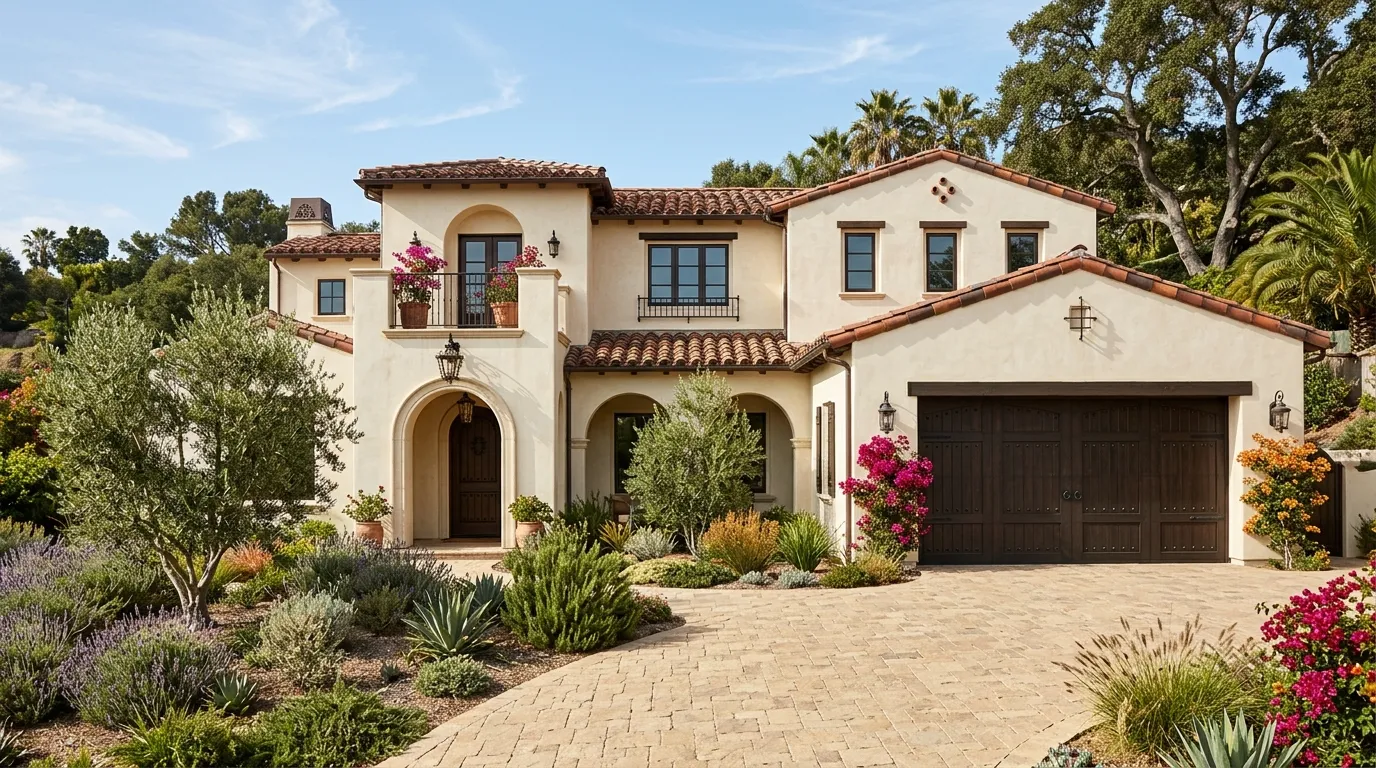
Can You Do This Yourself
Torrance's houses date mostly to 1963, and that year matters more than it sounds like it should. Doors from that era were almost always sectional, hung on a pair of stretched extension springs over the horizontal track rather than a torsion bar over the header. Extension springs store the same energy a torsion spring does, but they're mounted in the open, at head height, with no shaft to contain them if a cable slips.
That's the job we tell homeowners not to touch. A stuck opener chain, a loose bottom bracket bolt, or a track that's knocked slightly out of line - those you can look at yourself, and often fix yourself. A spring that's stretched, rusted, or has a cable starting to fray is not a weekend job; it's the one part of this house's original hardware that can put someone in the ER.
If you want to see what we've covered near this side of the service area, that's on our nearby areas page.
Parts We Carry
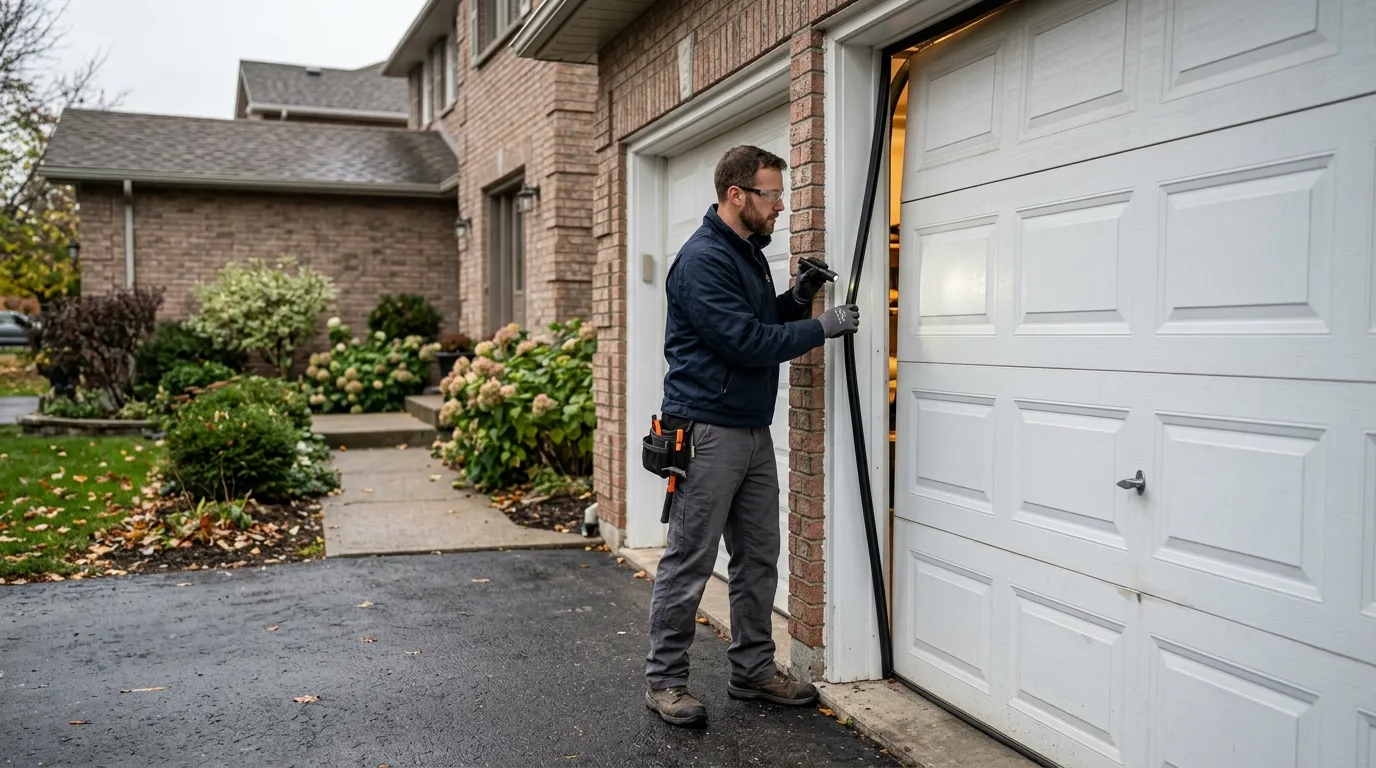
Because so much of Torrance went up in the early 1960s, we carry the extension springs and matching safety cables sized for the sectional doors that were standard then, plus the pulleys and stationary cones those systems use - parts that a lot of newer torsion-only trucks don't bother stocking anymore. We also carry rollers, hinges, bottom seals, and openers to replace the chain-drive units that came standard on houses from that build era and are now well past the age where parts get made for them. What we don't carry on the truck is every obsolete track bracket or wood-jamb hardware still bolted into an original frame - some of those need to be special-ordered, and we'll tell you that up front rather than stall you at your driveway.
What Causes It Around Here
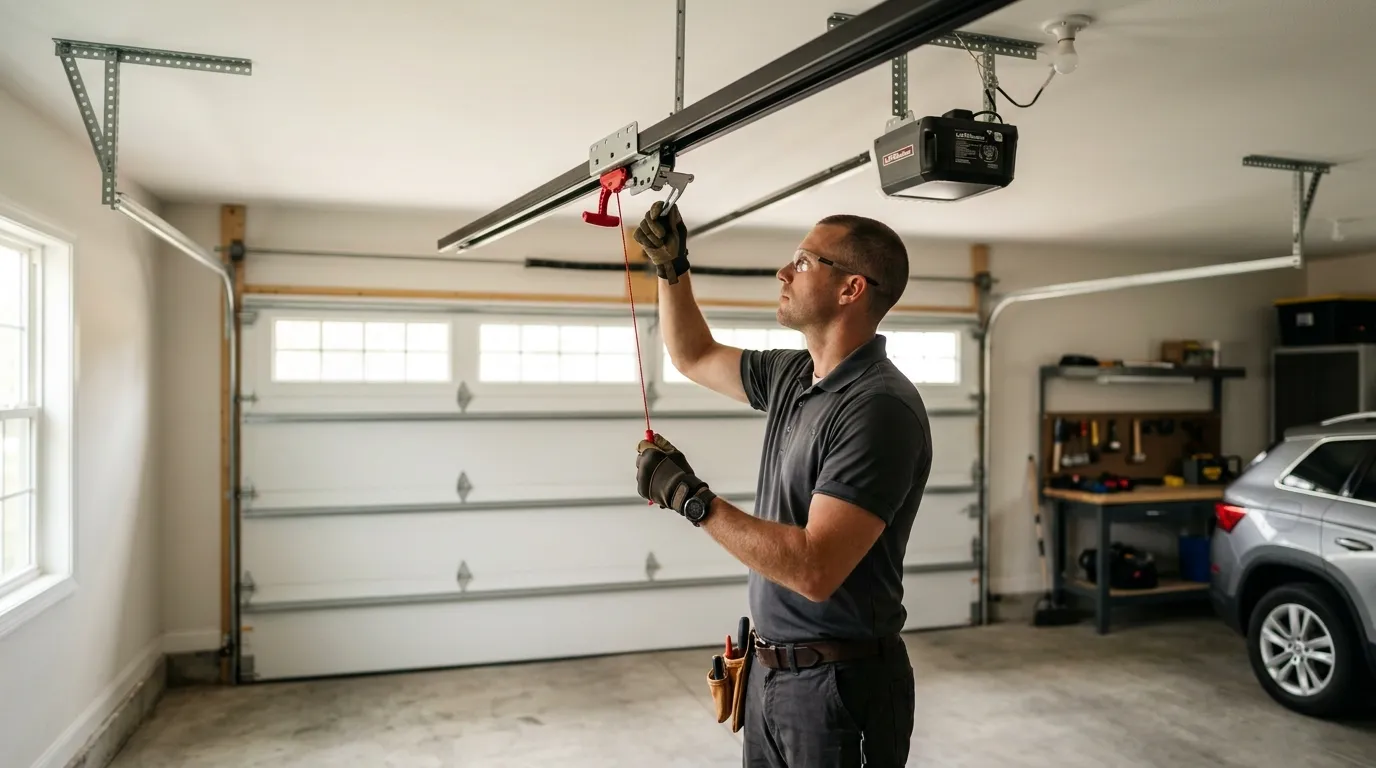
The climate here is mild - no deep freezes, no monsoon season - so the failures we see in Torrance aren't weather failures, they're age failures. A median build year of 1963 means a lot of extension springs are original or close to it, and steel fatigues on a fixed number of open-close cycles whether the weather is kind or not. Sixty years of daily use wears the temper out of a spring long before rust ever gets to it.
We also see galvanized cables that have quietly frayed at the drum from decades of the same friction point, and rollers that were steel to begin with - steel rollers on a track that's flexed slightly out of true over sixty years make a grinding sound that people mistake for the opener dying, when it's the roller. None of this is storm damage. It's just a lot of houses built in the same decade, hitting the same failure point roughly the same decades later.
How Long You Are Without the Door
We run this out of Los Angeles, about 13 miles away, so we're not going to promise a same-hour arrival the way a shop physically in Torrance could. What we can tell you is what actually eats time on the job itself: if the fix is a snapped extension spring or a bad cable, that's parts we carry and a same-visit repair.
If it's an original bracket, an obsolete track section, or hardware bolted straight into a wood jamb from the original build, that piece sometimes has to be ordered rather than pulled off the truck, and that adds a day or two you should plan around rather than be surprised by. We'd rather tell you that before we're at your house than after.
What You Are Seeing
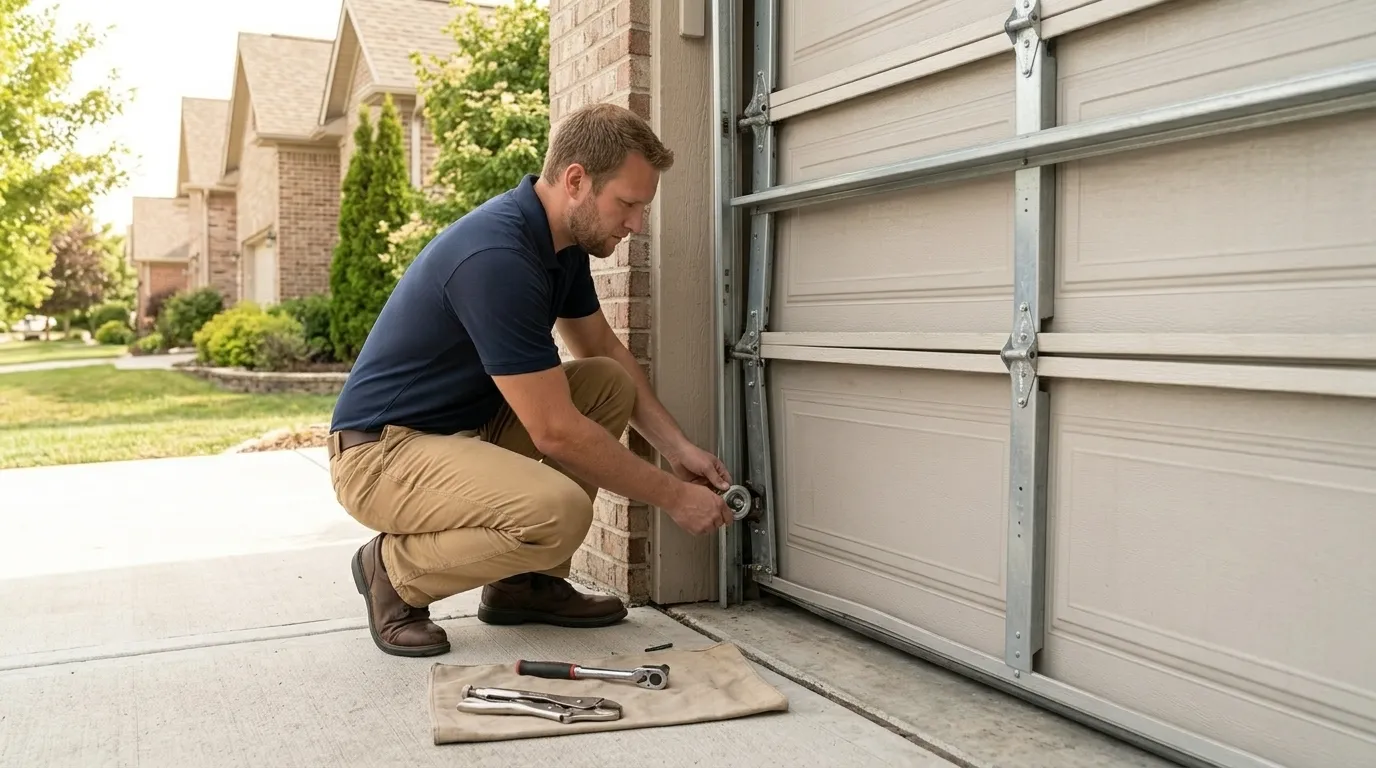
If the door is sagging on one side when it's halfway up, or the cable on one drum looks looser than the other, that's an extension spring giving out - common on doors original to a 1963-era build. A grinding or scraping sound as the door travels, especially near the top of the track, usually points to a steel roller that's worn down rather than the opener motor. If the door reverses on its own partway down, or won't close all the way, check the safety cable first - on older extension-spring setups, a frayed one triggers the same kind of reversal a modern sensor would.
A door that's suddenly heavy to lift by hand, with the opener straining, almost always means one spring has already let go and the other is doing all the work. None of these point to a bad opener until the springs and cables are ruled out first.
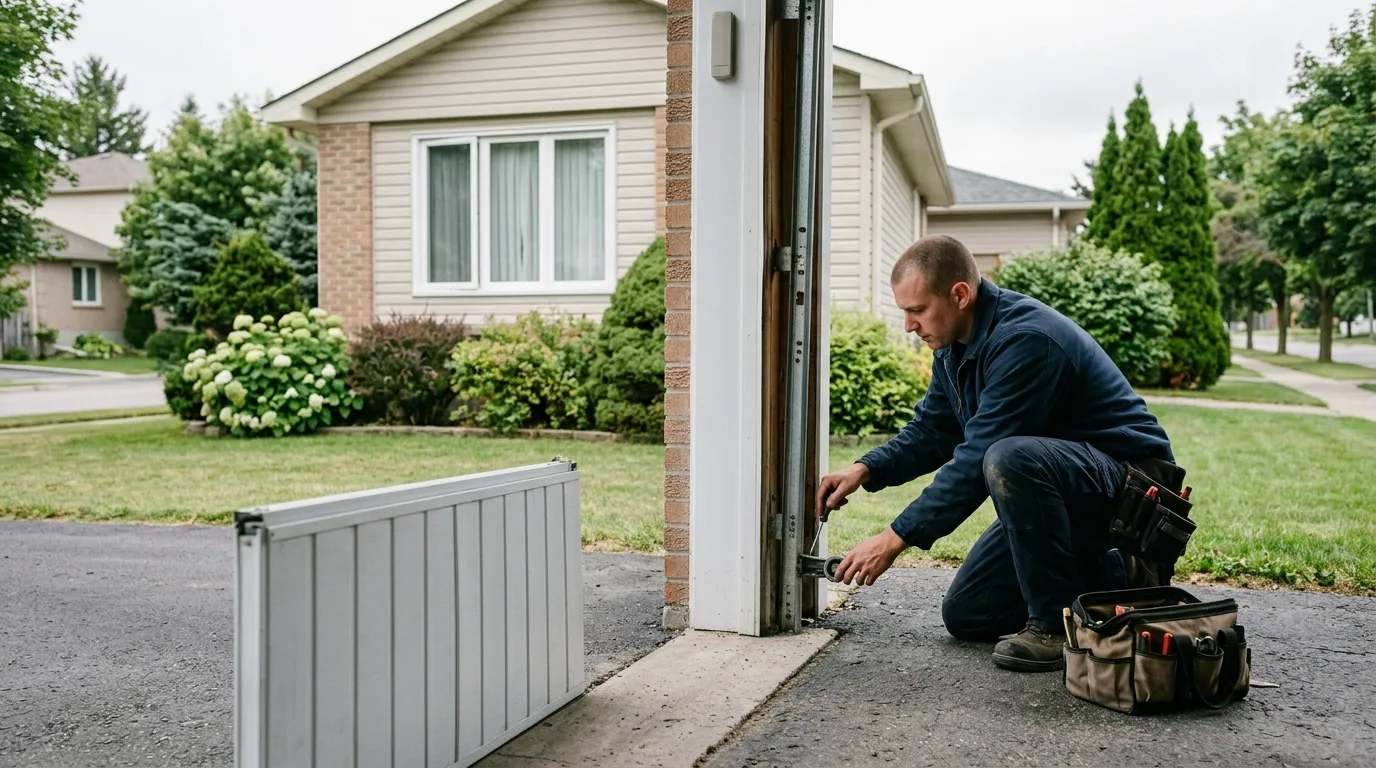
Recent Work in Torrance
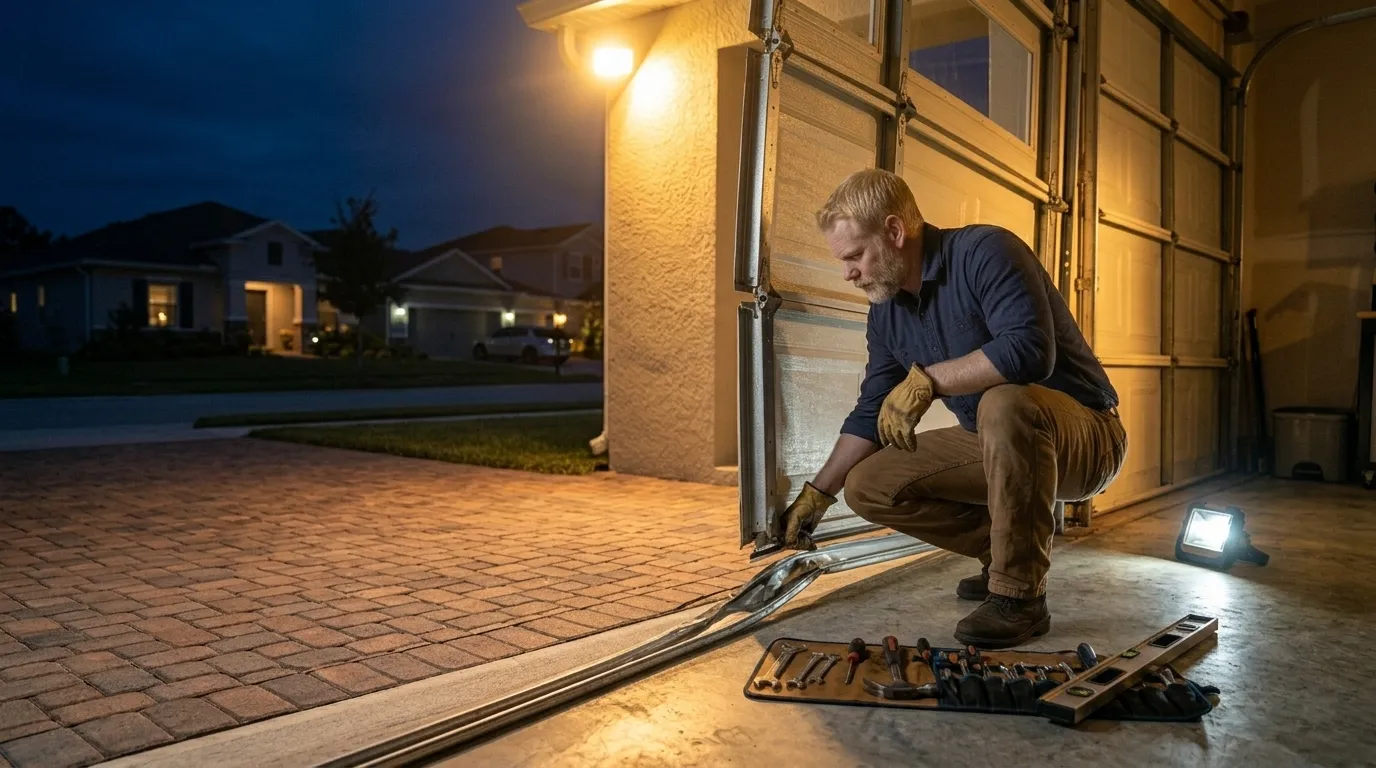
A look at jobs our crew has been on nearby.
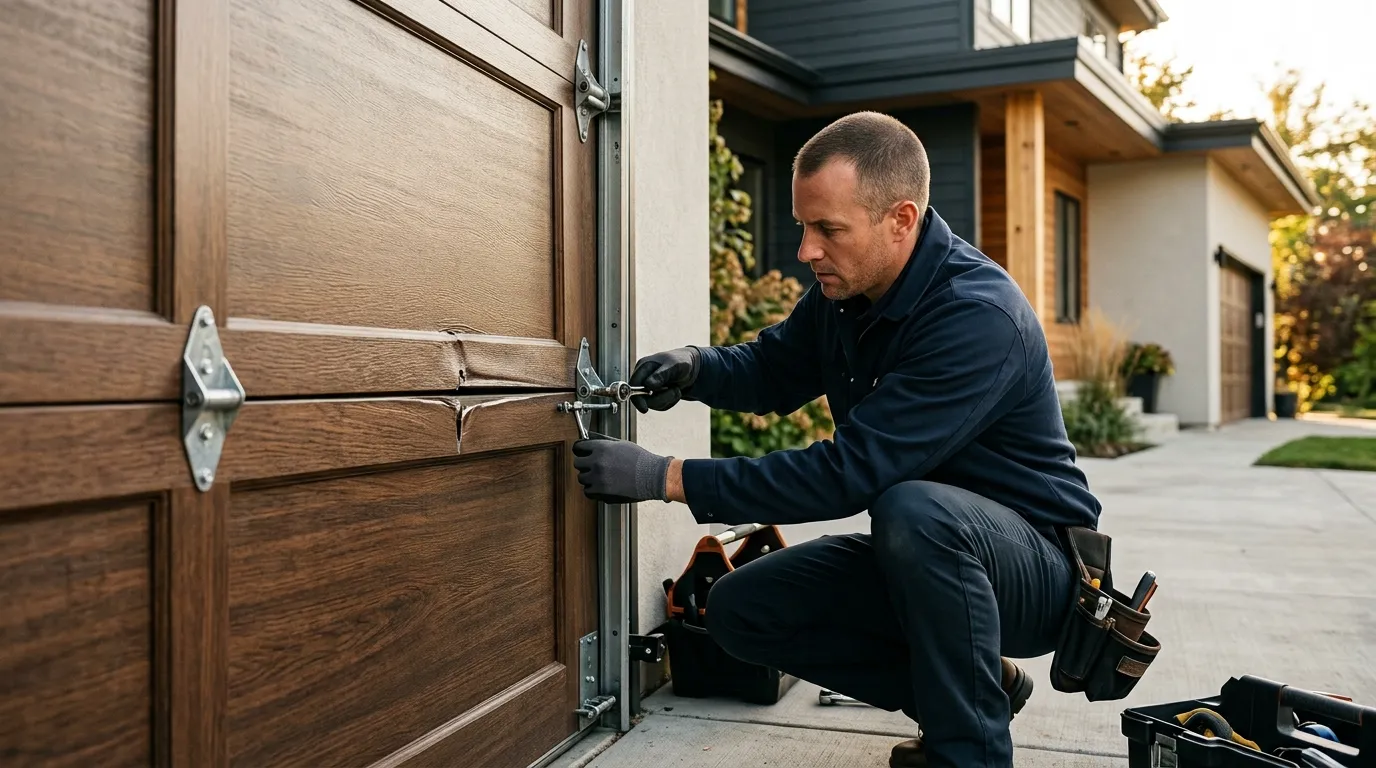
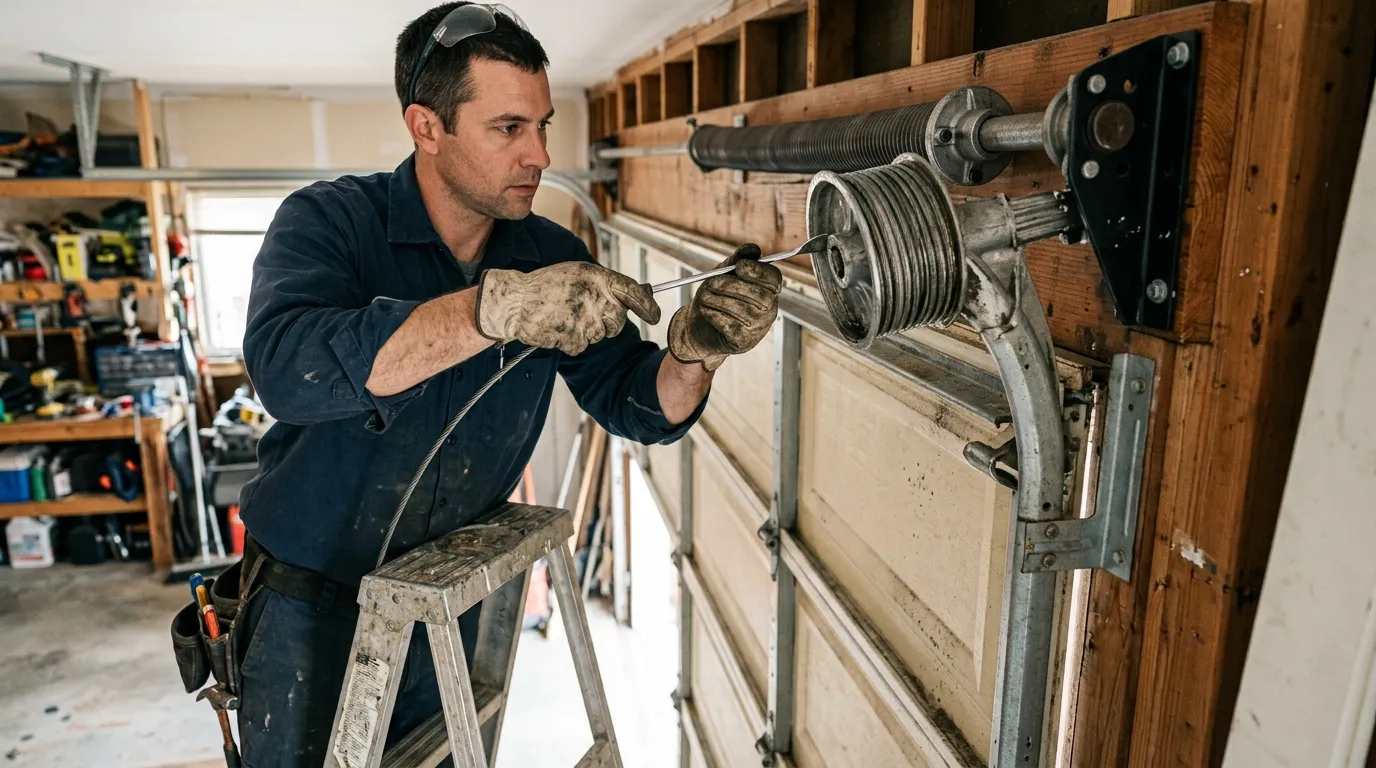
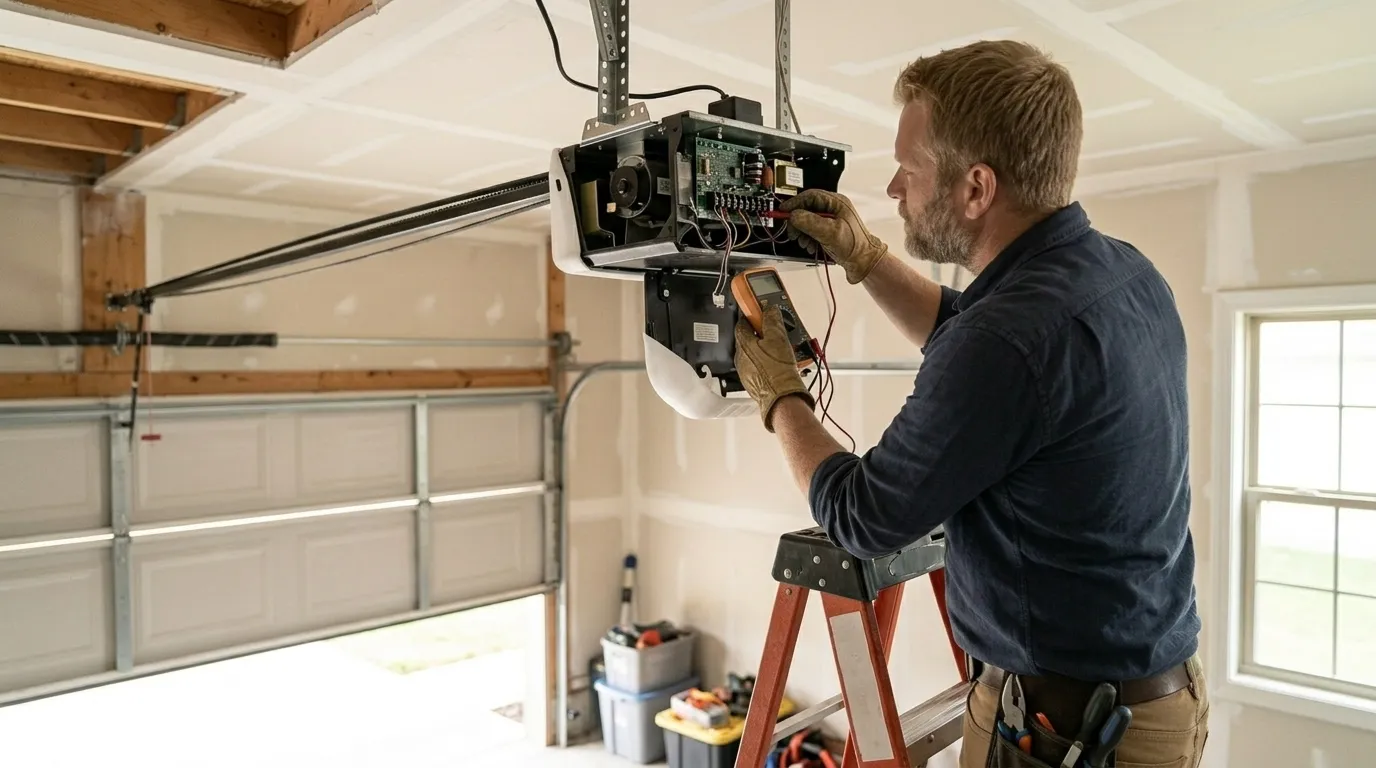
Talk to a Torrance Technician First
Describe what the door is doing and get a straight answer on what it likely needs.
Why Torrance Calls Us
What Happens When You Call
-
1
Call or Request a Quote
Tell us what the door is doing and roughly how old the house is - that alone points us toward the likely part before a truck leaves.
-
2
On-Site Diagnosis
A tech checks the spring, cables, tracks, and opener in person and tells you plainly what is actually wrong.
-
3
Straight Price, No Surprises
You get a number before any work starts. It covers parts and labor, nothing added after the fact.
-
4
Fixed the Same Visit
Most repairs are done in one trip. If a part needs sourcing, we tell you that upfront instead of guessing.
Other Garage Door Services in Torrance
Frequently Asked Questions
Why does my extension spring keep breaking every few years?
Extension springs have a fixed cycle life, and a lot of Torrance garages were built with them in the early 1960s. Decades of daily use wear the temper out of the steel regardless of weather. Once one side breaks, the other is usually close behind since they've carried equal cycles. Replacing both at once, rather than just the broken one, is usually the smarter call.
Do you have a shop near Torrance?
No. We work out of Los Angeles and travel to Torrance for calls, about 13 miles each way. We carry the parts for extension-spring doors common to this area's 1960s housing stock on the truck, so most jobs are done in one visit - we just can't promise a same-hour local response the way a shop based in town could.
Is it safe to replace an extension spring myself?
No. Extension springs are mounted in the open above the track with no shaft to contain the tension, unlike a torsion spring in a tube. A slipped cable or a spring letting go while you're working near it can cause serious injury. Track adjustments, hinges, and rollers are reasonable DIY jobs. Springs and their cables are not.
Why does my door grind near the top of the track instead of running smooth?
That's almost always a worn roller, not the opener. A lot of doors from this build era shipped with steel rollers, which wear down and start grinding against a track that's flexed slightly out of true after sixty years of use. Swapping to nylon rollers usually quiets it and takes pressure off the opener motor.
Need Garage Door Repair in Torrance?
Call now for straight answers on cost and timing.